
Buying a Suppressor in 2026: $0 Tax, Approval in Days, and How It Works at Our Counter
The $200 stamp is gone and eForm 4s clear in days. What a suppressor really costs now, which can to buy first, and how it works at our Steamboat counter.

On this page
For thirty years, buying a suppressor meant paying a $200 federal tax on top of the can and waiting most of a year for ATF. Both of those are gone. Since January 1, 2026 the tax on a suppressor is $0, and electronic Form 4s are clearing in days. If you put this off because of the cost or the wait, the reasons went away.
Here’s what it actually costs now, which can to buy first, and what happens at our counter.
What changed
The 2025 federal budget law (Public Law 119-21, the “One Big Beautiful Bill Act”) cut the National Firearms Act transfer and making tax on suppressors, short-barreled rifles, short-barreled shotguns and “any other weapons” from $200 to $0, starting January 1, 2026. Machine guns and destructive devices are still $200. ATF updated its regulations to match.
The paperwork did not go away. You still file a Form 4, still get fingerprinted and photographed, still pass a background check, and still wait for ATF approval before the can goes home. A federal court ruling in August 2026 didn’t change that for Colorado buyers; our ruling explainer covers why.
What a suppressor costs now
The stamp was the part people complained about, but it was never the biggest number. The honest total looks like this:
| Line | What to expect |
|---|---|
| The suppressor | Rimfire cans start lowest; centerfire rifle cans cost more; titanium costs more than steel. MAP pricing shown where the maker requires it. |
| Federal tax stamp | $0 (was $200) |
| Mount or thread adapter | Depends on the can and the host. Some cans include one, some don’t. |
| Barrel threading, if your rifle isn’t threaded | Done on our bench. Ask for an estimate. |
| Our NFA transfer fee, can bought elsewhere and shipped to us | $125 per serial number |
| Colorado excise and sales tax | Same as any other purchase |
The point: budget for the mount and, if needed, threading. A can that doesn’t fit your rifle is a paperweight.
How long it takes now
ATF publishes average processing times by form type. Through the summer of 2026, electronic Form 4s filed by individuals averaged under two weeks, and trusts ran longer, roughly two to five weeks depending on the month. Plan on about a week or two for an individual and longer on a trust. Those numbers move. Ask us when you come in and we’ll tell you what our last few approvals took.
Paper Form 4s still exist and still take far longer. Nobody files paper anymore.
Which can to buy first
Most people’s first suppressor ends up being one of three. Pick by what you shoot most, not by what’s coolest.
A .22 rimfire can
The least expensive way in and the one that gets used the most. A suppressed .22 with subsonic ammo is quiet enough to shoot without bothering the neighbors, it makes teaching a new shooter far easier, and .22 ammo is cheap. It fits rifles and pistols with the right thread. The SilencerCo Sparrow 22 is our best-selling can for a reason. Rimfire cans get dirty fast; pick one you can take apart to clean.
A .30-caliber rifle can
The hunting can. A .30-caliber can will generally work on smaller bores too: .308, .30-06, 6.5 Creedmoor, 7mm, .300 magnums, .223, as long as the can is rated for the cartridge and you match the thread or mount. One can, several rifles. For elk country, weight matters; titanium and shorter cans cost more but you carry them up the hill. CPW allows suppressors for hunting in Colorado; check the current regulations for your season.
A 9mm pistol can
Pistol cans need a threaded barrel and, on most semi-auto pistols, a piston (booster) so the gun keeps cycling. Many 9mm cans also go on a .22 or a 9mm carbine. Fun, and more parts to get right. Ask before you buy so the barrel, piston and thread all match.
Questions that decide it
- What’s the host gun, the caliber and the barrel thread? Bring the gun if you can.
- Is the barrel long enough that adding six to eight inches still carries well in the field?
- Direct thread, or a quick-detach mount so one can moves between rifles?
- Will you clean it yourself? Rimfire and pistol cans need it; most rifle cans don’t.
Three that are in the shop now, one for each kind of host:
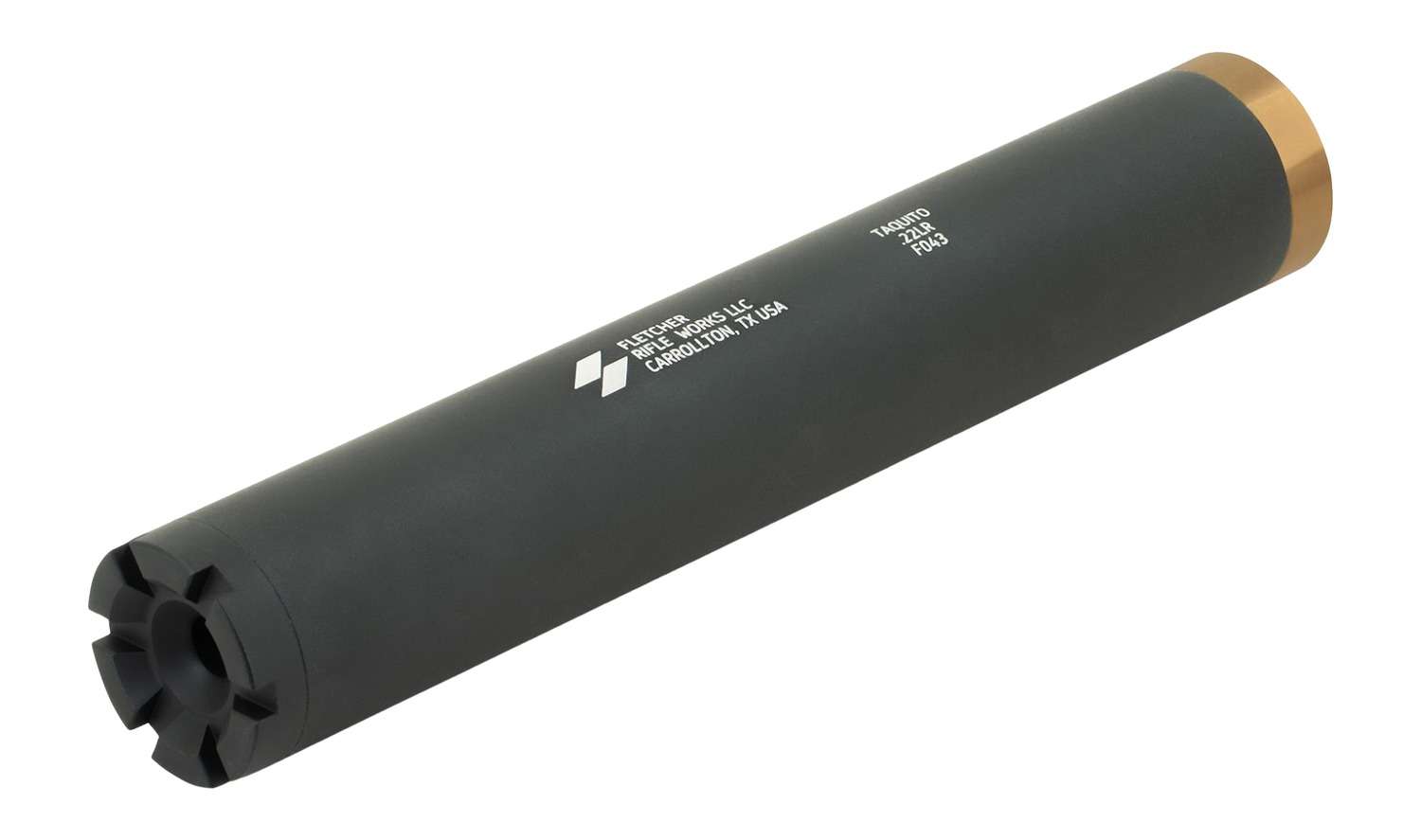
Taquito 22
.22 LR · Fletcher Rifle Works
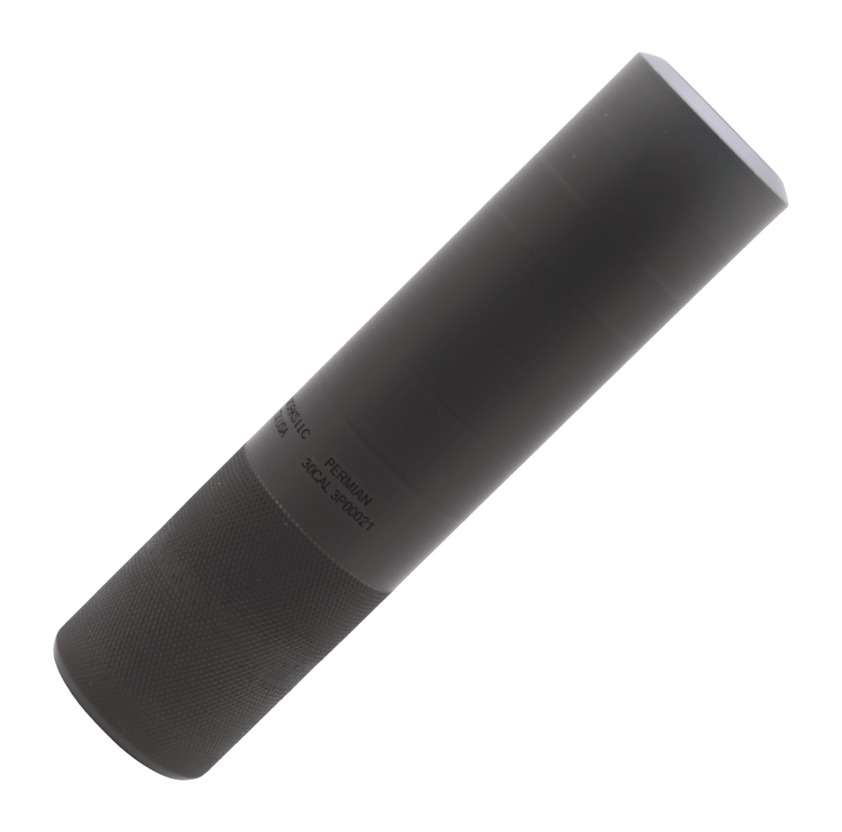
Permian 30
.30 cal · Fletcher Rifle Works
OCL Infinity 556K
5.56 NATO

All suppressors
What we have and can order
How it works at our counter
We’re a full-line NFA dealer and do the whole transaction in the shop. The short version, with the full walkthrough in our how-to-buy guide:
- Pick the can. Handle what’s in the safe, or we order the one you want.
- Buy it. It stays in our safe until ATF approves the transfer to you.
- Prints and photo at the counter, same visit. No mail-in fingerprint cards, no trip to the sheriff.
- File the eForm 4 as an individual or a trust.
- We call you when it’s approved. Bring your ID, we finish the paperwork, it goes home with you.
You have to be 21 to buy a suppressor from a dealer. Bought a can online from somewhere else? It ships to us, not your house, and we run the same Form 4 to you. Call before you order so we can send our license to the seller.
Individual or trust
Both work and we process either. An individual filing is simpler and usually faster. A trust lets more than one person be responsible for the can. Who can possess it, lend it or inherit it are legal questions, so talk to an attorney who does NFA work before you decide. We’re not the ones to give that advice.
Colorado and SB25-003
Colorado adds no state permit or registration for a suppressor. SB25-003, the semi-auto law that took effect August 1, is written around the firearm, and a suppressor isn’t a “specified semiautomatic firearm.” So buying a can doesn’t take the eligibility card. The rifle you put it on might: a semi-auto rifle with a detachable magazine is covered; a bolt rifle isn’t. A bolt-action hunting rifle plus a .30-caliber can is the most common pairing we sell, and neither part needs the card. Our SB25-003 guide has the rest.
What a suppressor does and doesn’t do
It cuts the muzzle blast, roughly 30 dB on a typical rifle can. It doesn’t make a gun silent. A suppressed centerfire rifle is still loud, so keep your ear protection. What hunters notice most is less recoil, an easier follow-up shot, and not ringing for the rest of the day after one shot at an elk. Our how suppressors work page has the numbers.
This is general information, not legal advice. Every firearm and NFA transfer follows federal and Colorado law, including a background check.
Ready to start? Call us at (970) 879-7565 or come in. Bring the rifle and we’ll match the can, take your prints and photo, and file the same day.
 We’re Sponsoring the 2026 Colorado State PCSL Rifle Championship
Sep 30, 2026
We’re Sponsoring the 2026 Colorado State PCSL Rifle Championship
Sep 30, 2026
 How Silencers Make Shooting Safer and Easier
Aug 15, 2026
How Silencers Make Shooting Safer and Easier
Aug 15, 2026
 The Ultimate Guide to Silencers
Aug 15, 2026
The Ultimate Guide to Silencers
Aug 15, 2026