
Steel Challenge: The Complete Guide to the Sport

Five plates, eight standardized stages, and a clock. What Steel Challenge is, all 16 divisions, how classification actually works, and what you need to shoot your first match. Current to the 2026 rulebook.
ERG Crew
Updated September 9, 2026

On this page

If you only read one paragraph

Steel Challenge is five steel plates, eight standardized stages, and a clock. No movement on seven of the eight stages, no reloads required, no scoring rings to argue about. You can shoot your first one with a .22 pistol, a hundred rounds and a holster, and you will know exactly how you did before you leave the range. That is why it is the best on-ramp into competitive shooting that exists.

What Steel Challenge actually is

The Steel Challenge Shooting Association runs a speed-shooting sport built on eight official stages that never change. The same eight stages, with the same target sizes at the same distances, are set up at club matches in every state and at the World Speed Shooting Championship. That is the thing that makes the sport unusual: your time on 5 to Go at a Tuesday club match in Colorado is directly comparable to a Grand Master’s time on 5 to Go at nationals.
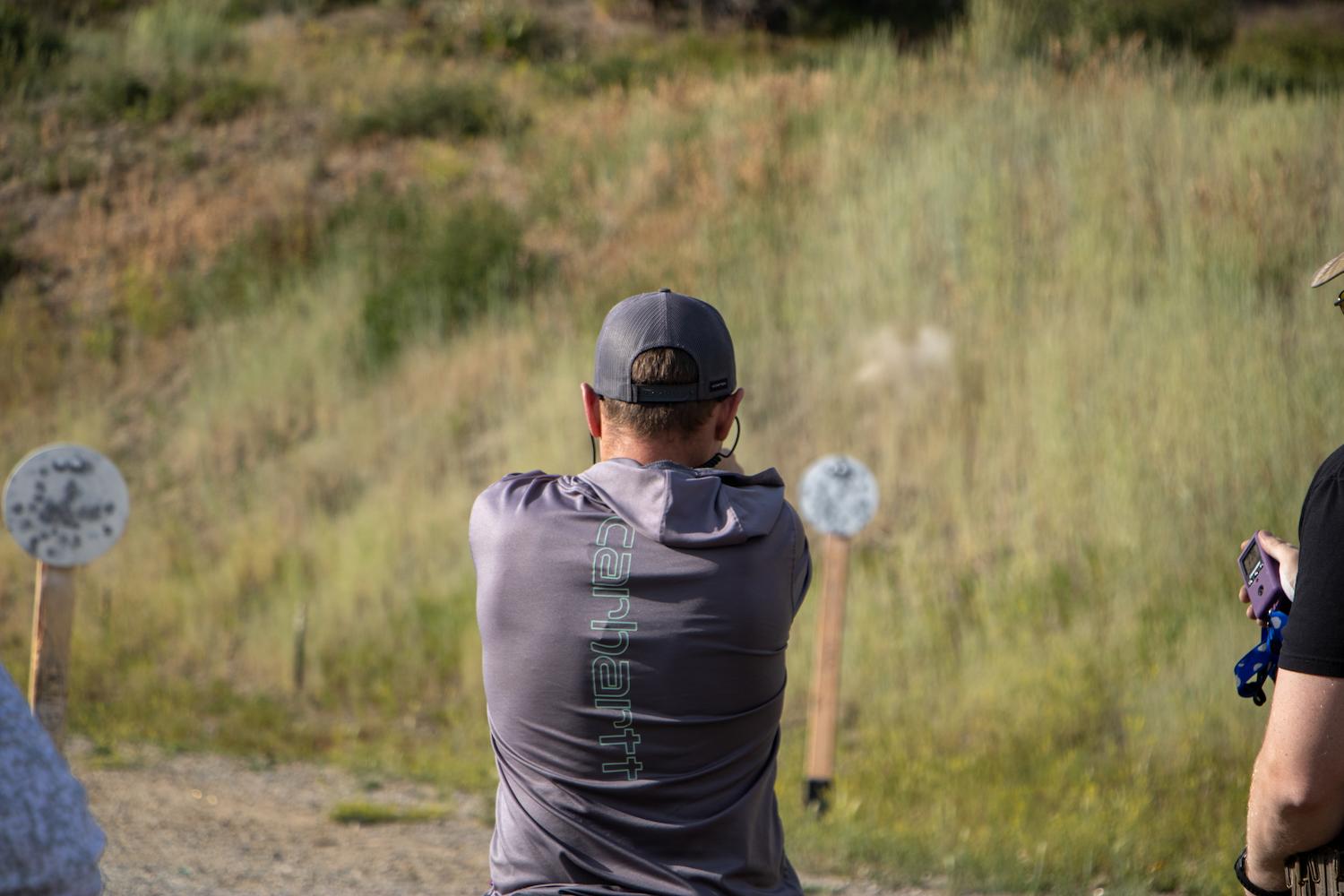
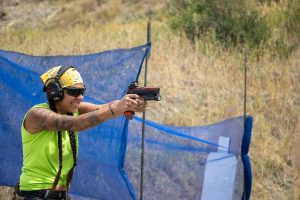
A competitor engaging a line of white steel plates at a Steel Challenge match

Four standard plates and a stop plate. That is the whole sport, eight different ways.

Every stage has exactly five targets — four standard plates and one stop plate. You shoot five strings (four on Outer Limits), your worst string is dropped, and the rest add up. Lowest total time wins. There is no scoring ring, no hit factor, no points. It is a stopwatch.

Stages8 official, standardized nationwide
Targets per stage5 — four plates and a stop plate
Strings5 per stage, best 4 count (Outer Limits: 4 and 3)
Divisions11 equipment divisions, 16 scoring divisions
MovementNone, except Outer Limits
ReloadsNever required

The eight stages

Learn the names and you can walk onto any range in the country and know what you are looking at. Each one has its own page with the official dimensions, a scale plan, the current peak times and how to shoot it.

  • SC-101 · 5 to Go — four 10″ plates staggered from 30 to 54 feet, 12″ stop plate close in at 21 feet. The classic.
  • SC-102 · Showdown — two boxes, two 18″×24″ rectangles way out at 75 feet, stop plate on the center line. You must rotate boxes.
  • SC-103 · Smoke & Hope — four big rectangles close in, stop plate at 42 feet. The fastest stage in the sport.
  • SC-104 · Outer Limits — the only stage with movement: three 4′×4′ boxes, rectangles at 105 feet, best three of four strings.
  • SC-105 · Accelerator — a near pair and a far pair, split left and right, stop plate up the middle.
  • SC-106 · Pendulum — four plates on one line at 54 feet, wide, with the stop plate close. Pure transitions.
  • SC-107 · Speed Option — plates scattered from 24 to 60 feet and a rectangular stop plate at 105 feet. The one that punishes a bad plan.
  • SC-108 · Roundabout — two near, two far, stop plate tucked in the middle at 30 feet.

Divisions: what you can shoot it with

Almost anything. Centerfire pistol, rimfire pistol, rimfire rifle, pistol-caliber carbine, revolver — and as of the 2026 rulebook, rimfire revolver. The rulebook lists eleven equipment divisions, and because five of them split into an optics version and an irons version, there are sixteen divisions you can hold a classification in.
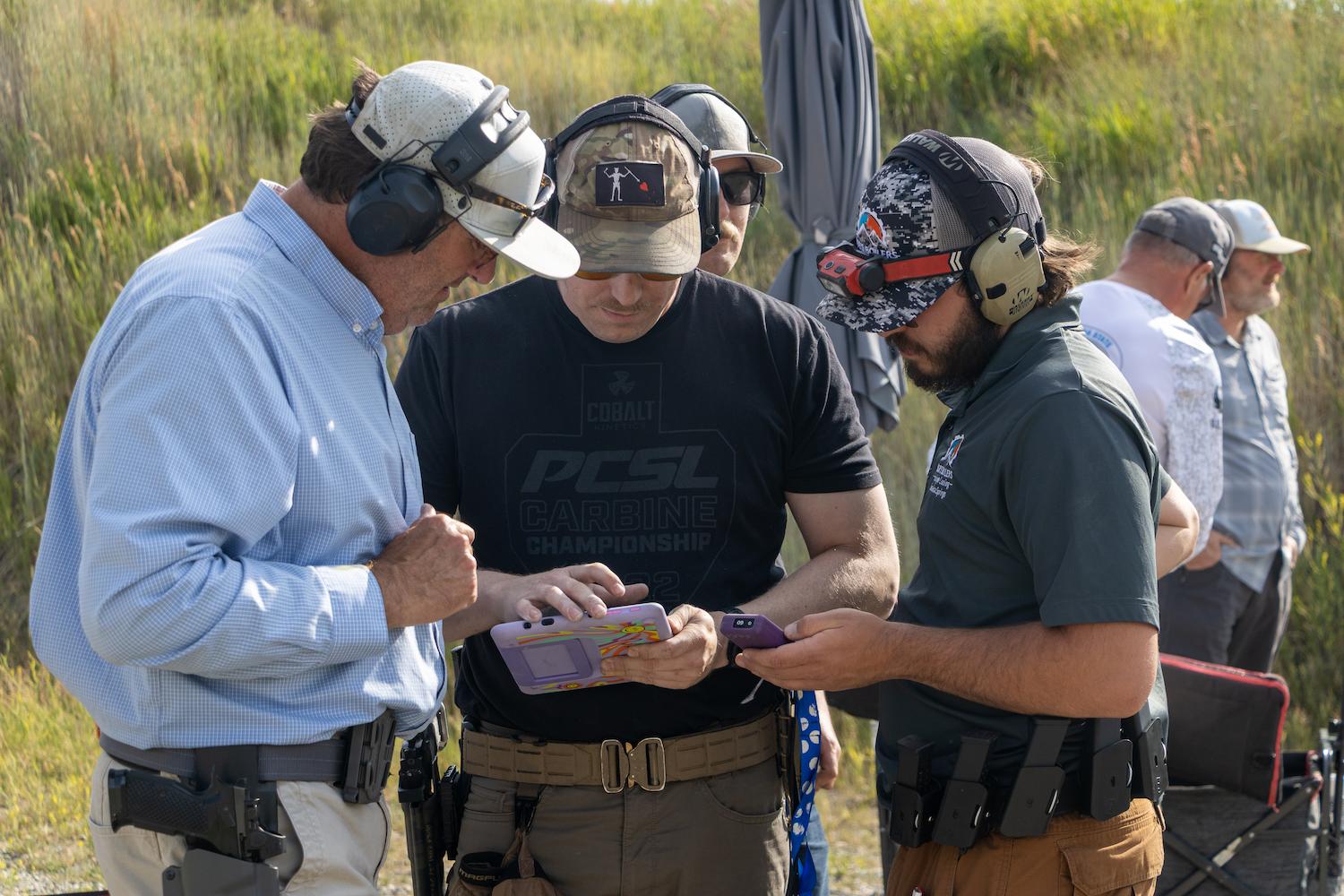
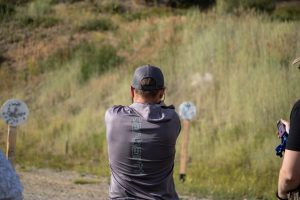
Competitors scoring a stage between strings at a club match

A club squad is usually five or six different divisions standing in the same line. Nobody cares what you brought.

If you have read elsewhere that there are nine, twelve or thirteen divisions, that guide is out of date. The names changed too: what used to be “Open” in the rimfire and carbine divisions is now Optics — RFPO, RFRO, PCCO. The full list, with the rulebook codes and everything that changed on March 1, 2026, is on the divisions page.

How classification works

Every division has a set of peak times — a fixed benchmark for each of the eight stages, derived from championship winning times. Your classification percentage is the total peak time for the stages you have shot, divided by your total time for those same stages.

GM95%+
M85%+
A75%+
B60%+
C40%+
D0%+

You need four of the eight stages in a division before you get a card. Classifications recalculate every Wednesday. Your percentage can fall; your class does not. The full peak-times table has every number and the worked math.

What you need to shoot your first match

Less than you think, and a lot less than the internet implies.

  • A gun. A .22 pistol or a .22 rifle is the easiest and cheapest place to start, and both are legitimate divisions with their own national records — not a beginner category.
  • Ammunition. A full eight-stage match is 39 strings — five on every stage except Outer Limits, which is four. At five plates a string that is 195 rounds if you never miss, so budget around 250 for a full match and about 150 for a typical five-stage club match.
  • Eye and ear protection. Non-negotiable, and every range will turn you away without it.
  • A holster, if you are shooting a centerfire handgun division. Rimfire and carbine divisions start from a case, pointed in at the flag — no holster required. The start position page has the details.
  • A chamber flag for rifles and carbines. Mandatory in transit.
  • Magazines. Three or four is plenty. You never have to reload during a string.

You do not need a competition belt, a race holster, a $700 dot or a range bag with your name on it. Come shoot one and then decide what is actually slowing you down.

The short list, if you’re building one

This is the whole kit for a first match. We keep all of it on the shelf in Steamboat, and we would rather talk you out of the expensive version than into it.

The reference pages

These are the numbers, kept in one place and stamped with a date.

  • Peak times — every division, every stage — the complete current table, the classification math, and what each number means as a par time you can set on a timer.
  • Divisions in 2026 — all sixteen, with the rulebook codes, the Open-to-Optics rename, and everything the March 1, 2026 rulebook changed.
  • Scoring and penalties — the 30-second ceiling, what a miss really costs, and the appeal window people forfeit by accident.
  • The start position — the aiming flag nobody describes correctly, and the difference between creeping and a false start.

Shoot one in Steamboat

Yampa Valley Practical Shooters runs a summer Thursday-evening Steel Challenge series at Routt County Rifle Club, and it is exactly the low-stakes first match we would send anyone to. Bring a .22 and you are in.

See the local series →

How current this page is

Everything here is written against the SCSA Competition Rules, edition 2026-03, effective March 1, 2026, and against SCSA’s live classification system as of September 8, 2026. The update date at the top of the page is the real one — when we revise, we re-stamp it.

Rules change, divisions get added, and peak times can be adjusted annually. We review these pages on a regular cycle against the primary sources and update them when something moves. If you find a number here that no longer matches the rulebook or the classification system, tell us — email [email protected] or stop by the counter, and we will verify it against the source and correct it on the next pass.

Sources and standing

SCSA Competition Rules, edition 2026-03, effective March 1, 2026; SCSA’s live classification system, retrieved September 8, 2026. We shoot this sport; we are not SCSA. The rulebook and your match director are the authority on what is legal at any given match.
Updated as of the date above

The date under the headline is the last time we checked this page against its sources — not the day it was first written. Rulebooks get amended, regulations change and season dates move, so we review these guides on a regular cycle and re-stamp the date whenever we revise one. If you find something here that has changed before we caught it, email [email protected] or tell us at the counter; we will verify it against the source and correct it.

From the shop in Steamboat

We write these because people ask us at the counter. Everything in them we either sell, service, or shoot ourselves — and if you'd rather talk it through than read about it, come in.

Get 5% off your first order

The guides land in your inbox first.

Colorado season dates and draw deadlines, what the law actually says when it changes, rebates worth claiming, and the Thursday match schedule when it drops. No spam, and you can leave any time.

Sign up & get 5% off

ERG Crew

The counter staff and gunsmiths at Elk River Guns in Steamboat Springs, Colorado. We write the guides we'd give you in person: Colorado season dates and regulations, platform and gear explainers, and straight answers about what the law actually says. We cite our sources and we don't give legal advice.
Share thisFacebook
Follow the shopFacebookInstagram

More from the ERG Library