

Optics decide more shots than most shooters realize. A good sight lets you find, identify, and hit your target under real-world conditions — low light, quick offhand, unknown distance. A bad one loses you the animal or the match. This is the shop-counter guide we hand new customers who ask “what scope should I put on this?”
Four Optic Families
Every shooter should know how to run iron sights. They don’t rely on batteries, don’t fog in cold weather, and don’t fail. Modern rifles ship with everything from simple bead sights on hunting guns to tritium-lit night sights on defensive rifles. The trade-off is speed and precision — irons force you to align three points (rear, front, target) at once, which slows you down and stresses eye alignment.

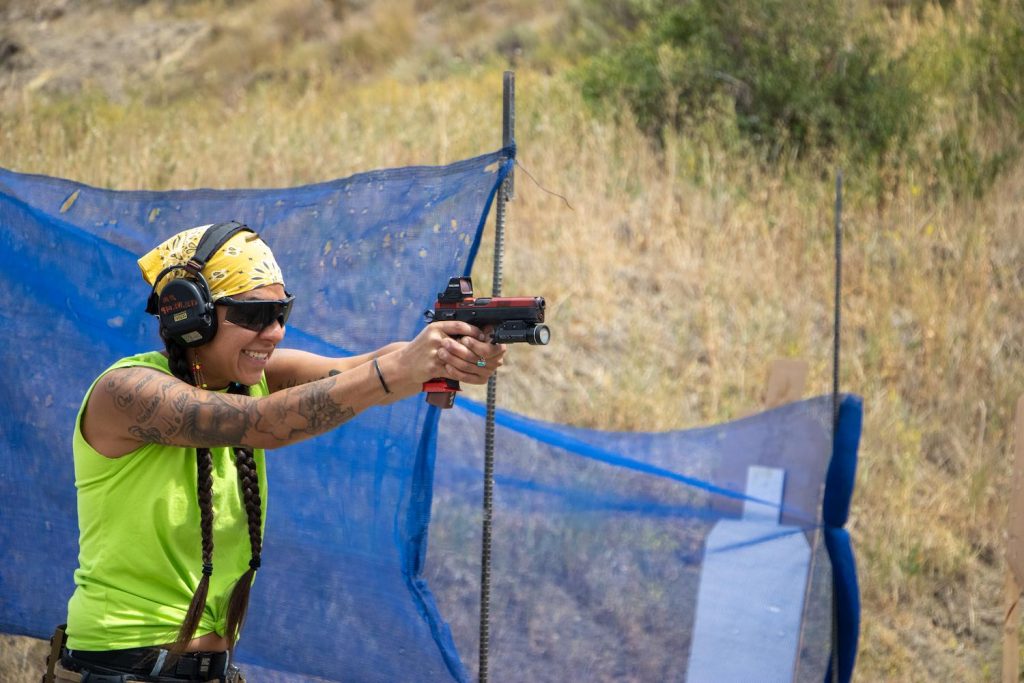
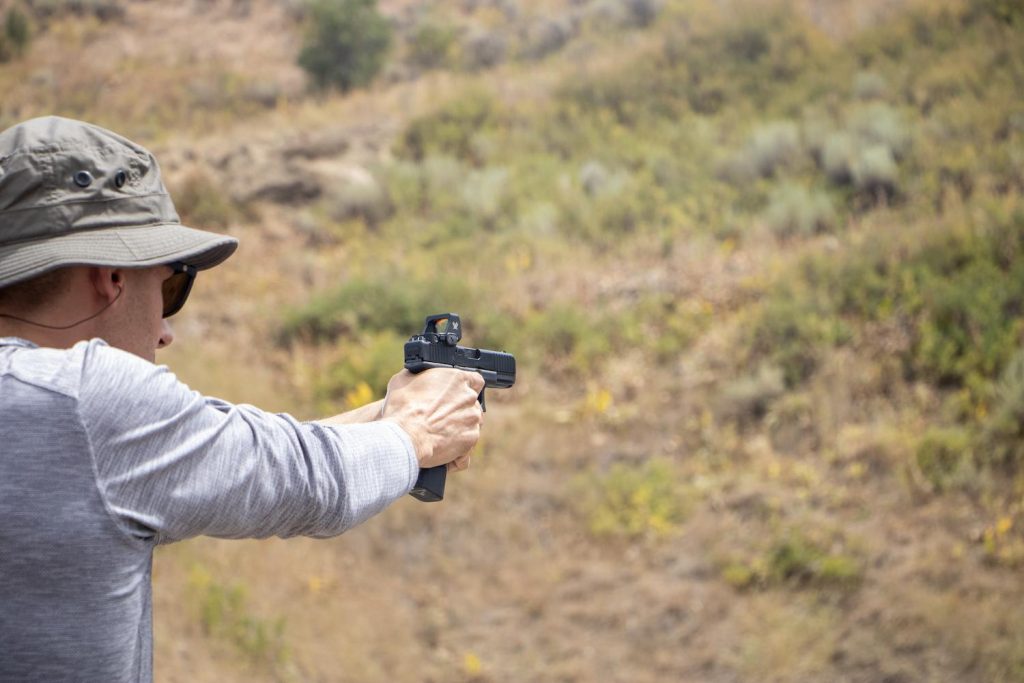
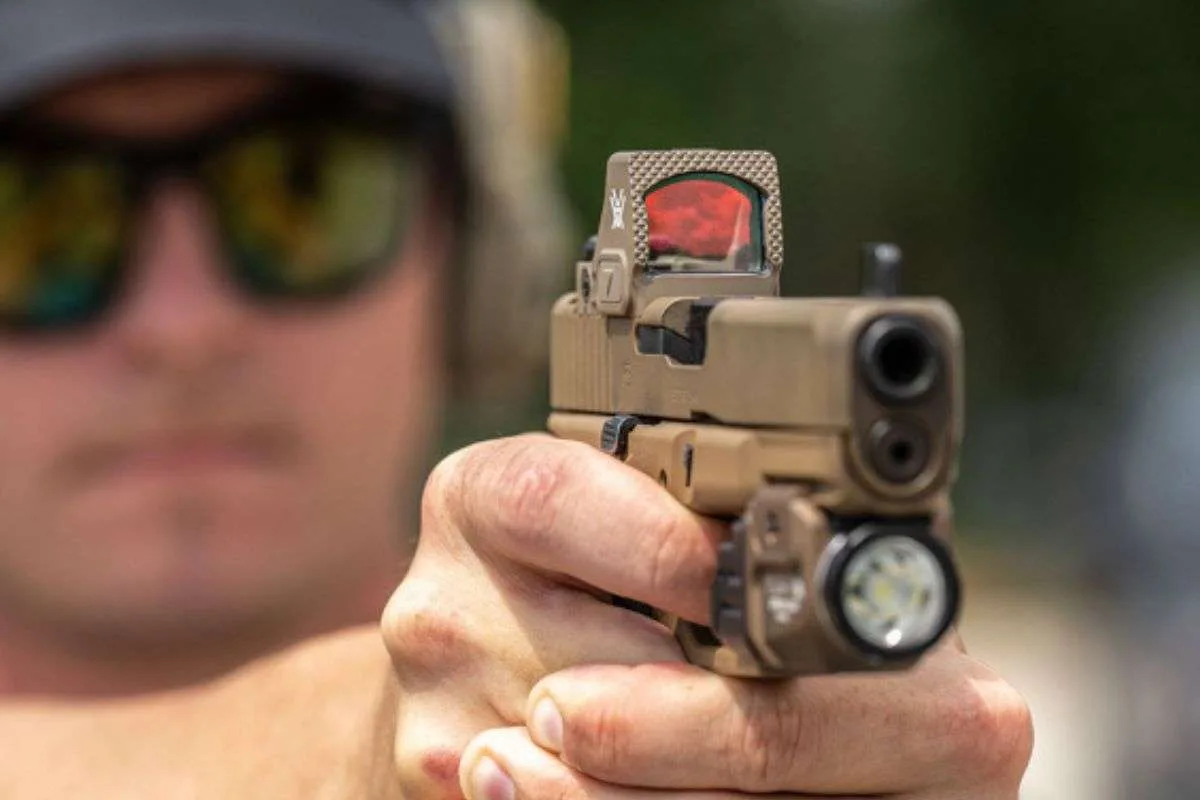
The single biggest quality-of-life upgrade for most shooters: a red dot puts a lit reticle on a piece of glass you can look through with both eyes open. No sight alignment, no parallax to speak of at typical distances. Just cover the target with the dot and press the trigger.
Match dot size to task: 2 MOA for precision, 3–4 MOA as a compromise, 6+ MOA for shotguns and turkey guns.
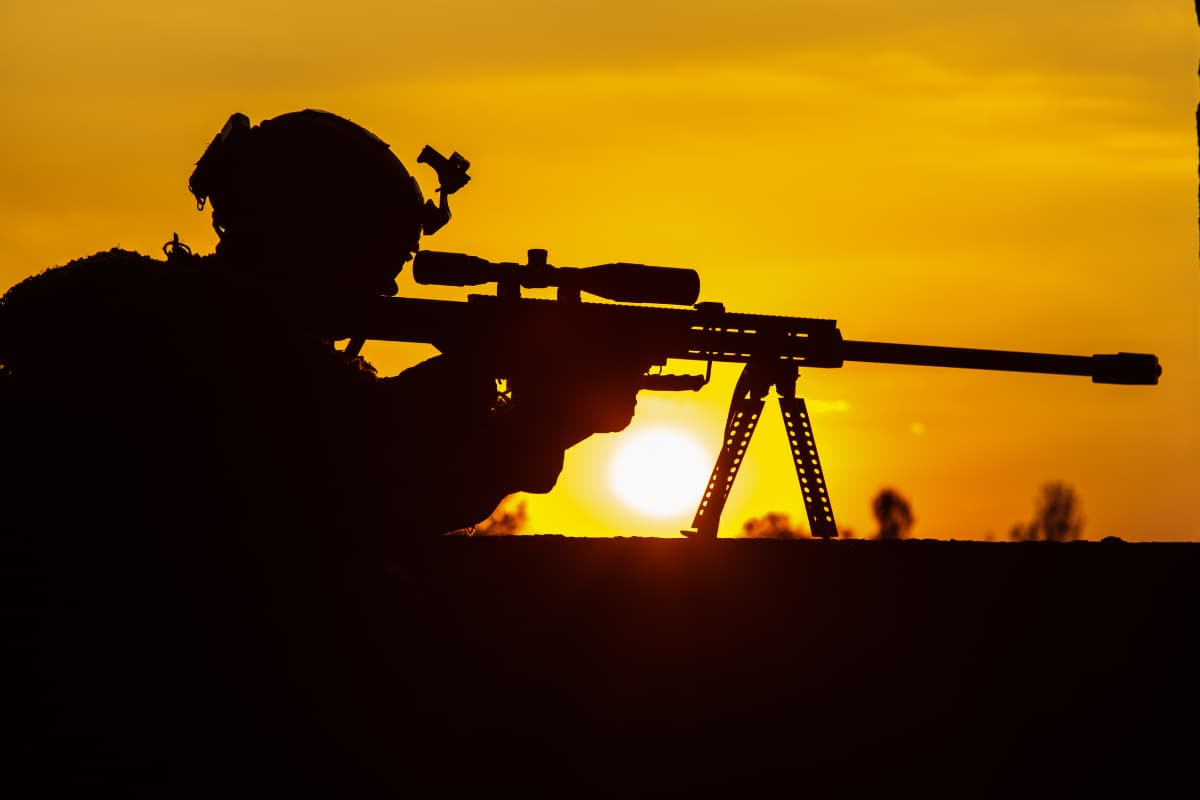
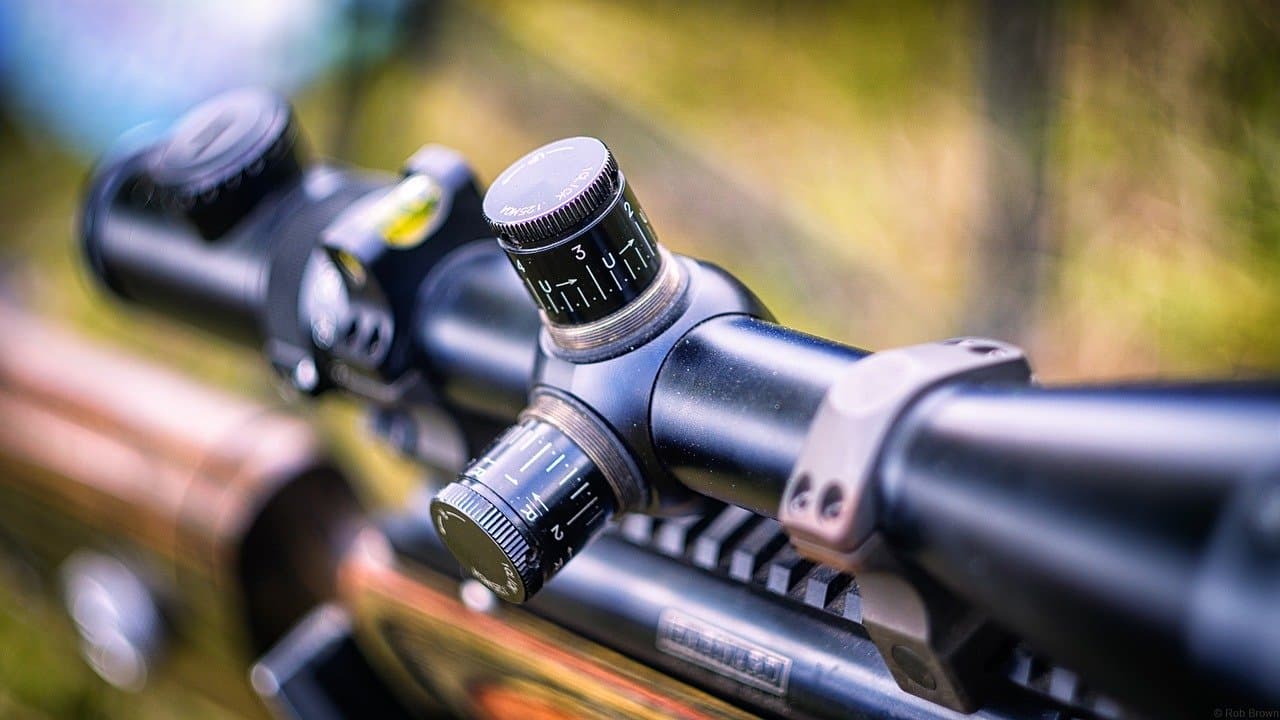
Old-school fixed scopes (4x, 6x, 10x) are simple, tough and cheap. Modern variable scopes let you dial magnification for the shot — 3-9x for classic deer/elk hunting, 4-16x or 5-25x for long-range work.
MOA and MIL are just units — use the one your buddies use so you can share holdovers. First-focal-plane reticles scale with magnification (holds always work); second-focal-plane reticles stay the same size (holds work at one specific power).
Prism scopes (usually fixed 1x, 3x, 4x or 5x) use an etched reticle instead of an LED, so they work with dead batteries and are astigmatism-friendly. Great for AR-15s. LPVOs (low-power variable optics) like 1-6x or 1-10x combo scopes cover from red-dot-speed at 1x to serious magnification for shots out to 500+ yards. Currently the most versatile optic class on the market.

1x on an LPVO lets you shoot both-eyes-open like a red dot — magnification is there when you need it.
An optic is only as good as the mount. Cheap rings ruin expensive glass. Buy quality steel or aluminum rings torqued to spec, use blue Loctite on the base screws, and level the reticle carefully. Then bore-sight to get on paper, and zero at your intended distance — 100 yards is the classic hunting zero, 50/200 is the classic red-dot zero for a 5.56 AR. Our gunsmiths mount, level, torque and bore sight for a nominal fee if you’d rather not do it yourself.
Read: What is bore sighting — and why should I do it? →

Riflescopes
Fixed & variable, MOA/MIL
Red Dots
Tube & reflex
Binoculars
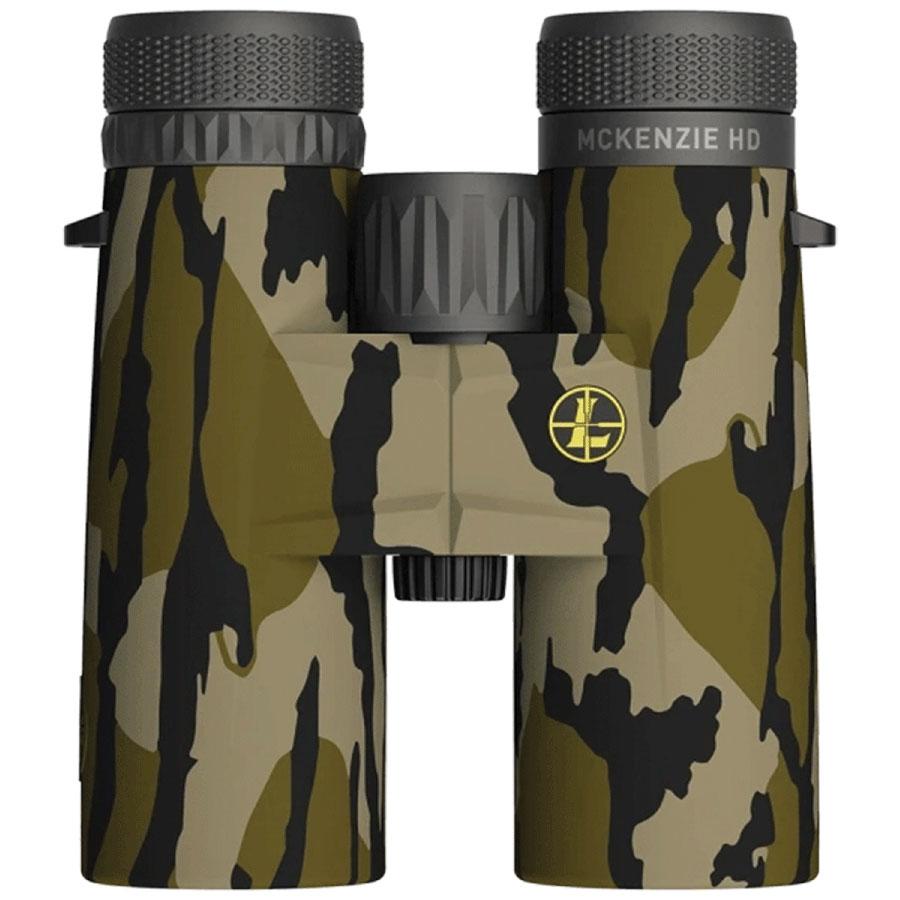
Find before you shoot
Spotting Scopes
Long-range judging
Related: Multiple Optics on One Firearm • Bore Sighting Explained