
$18,900.00
Only 1 left in stock
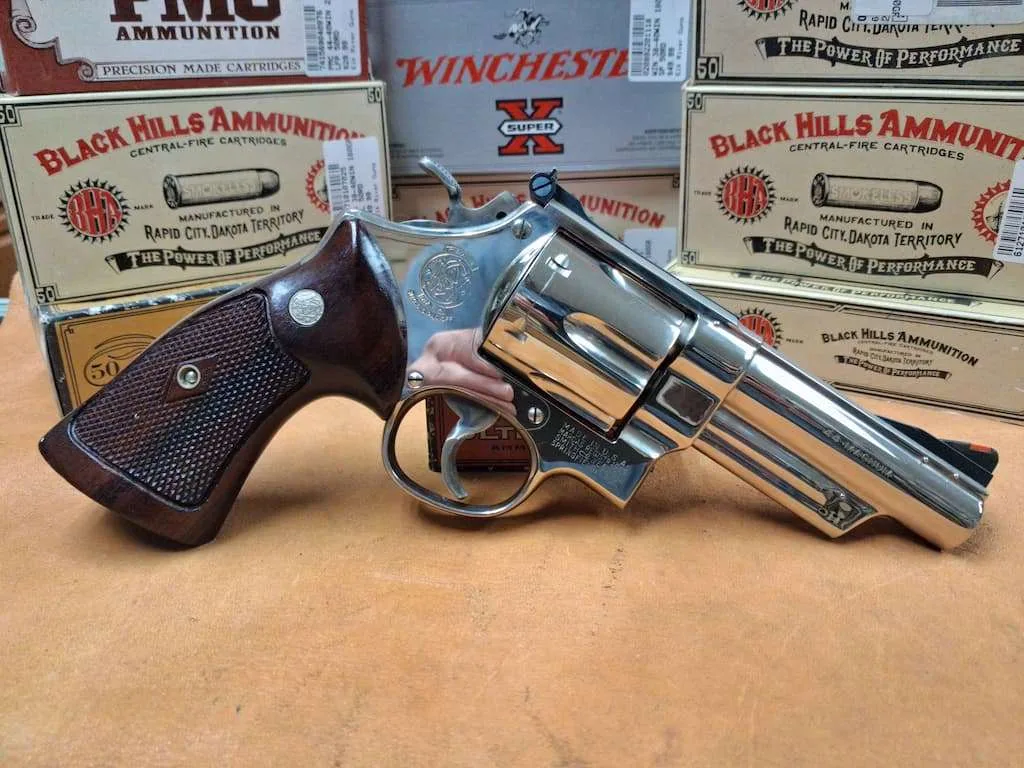
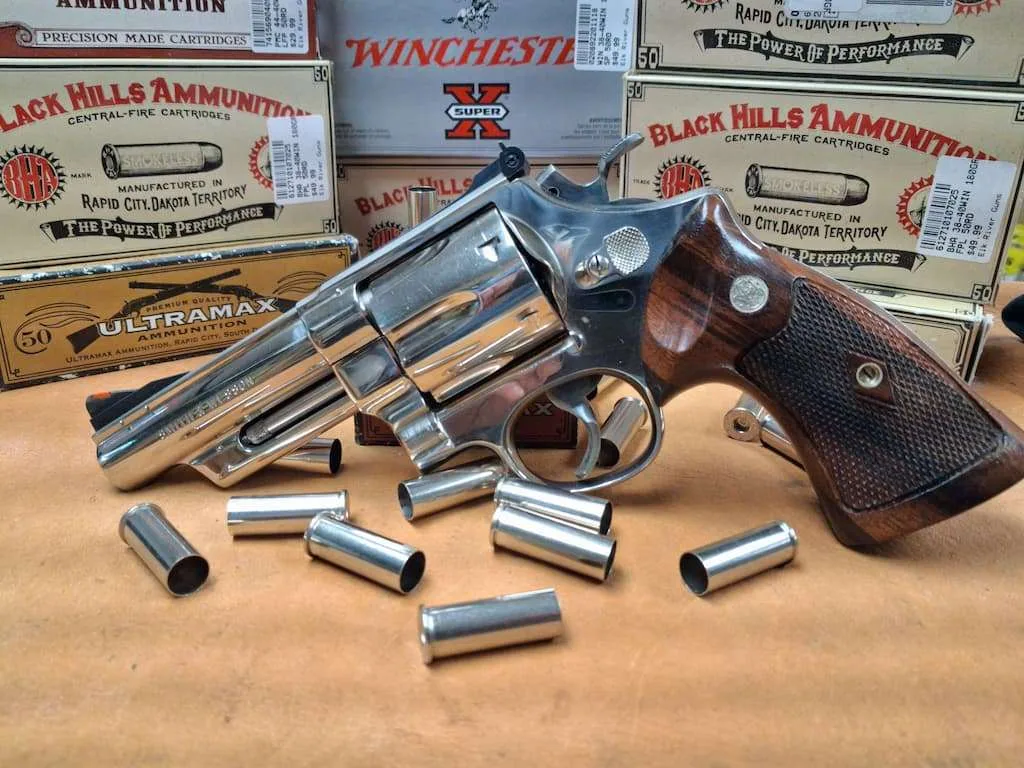
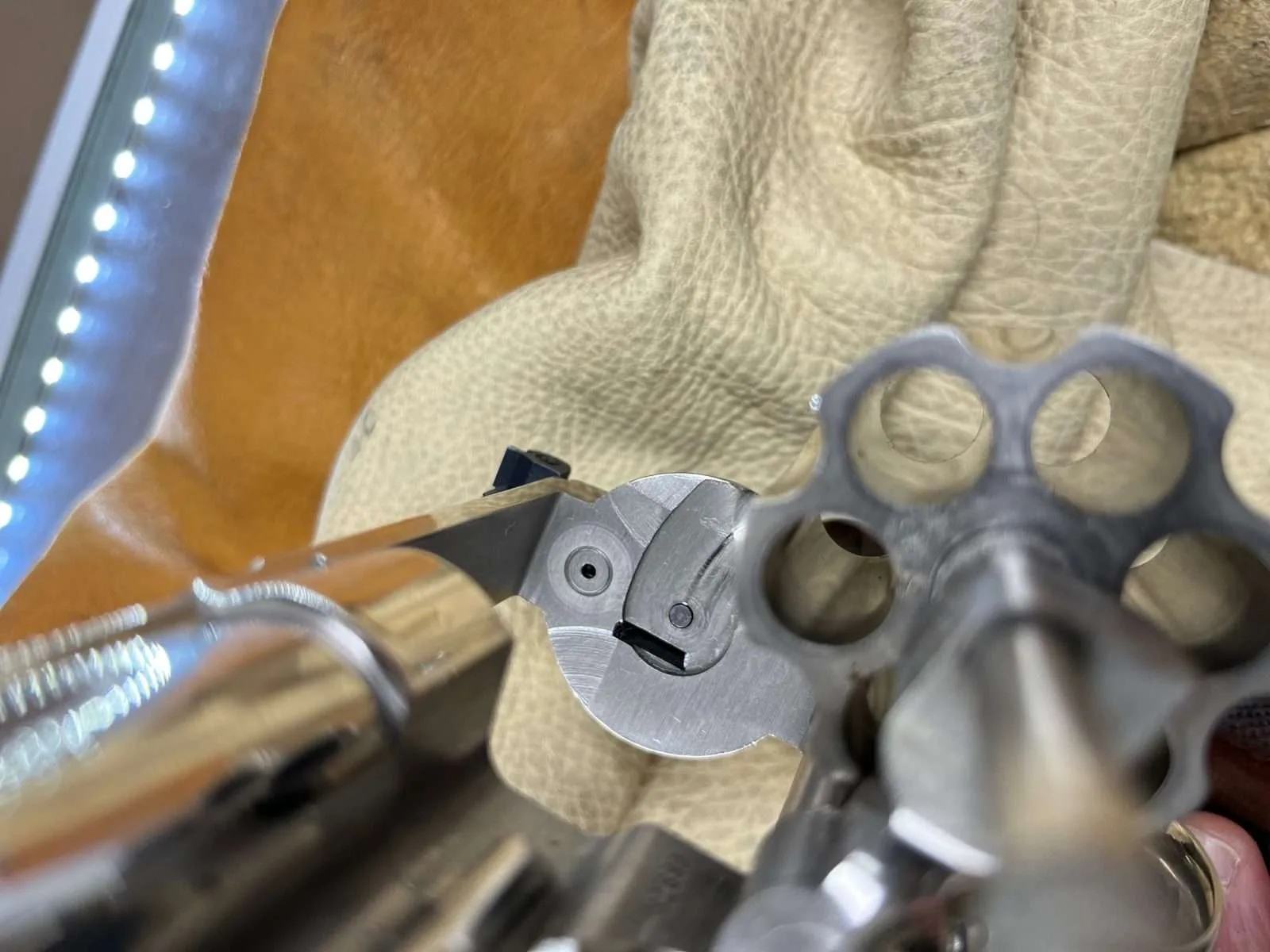
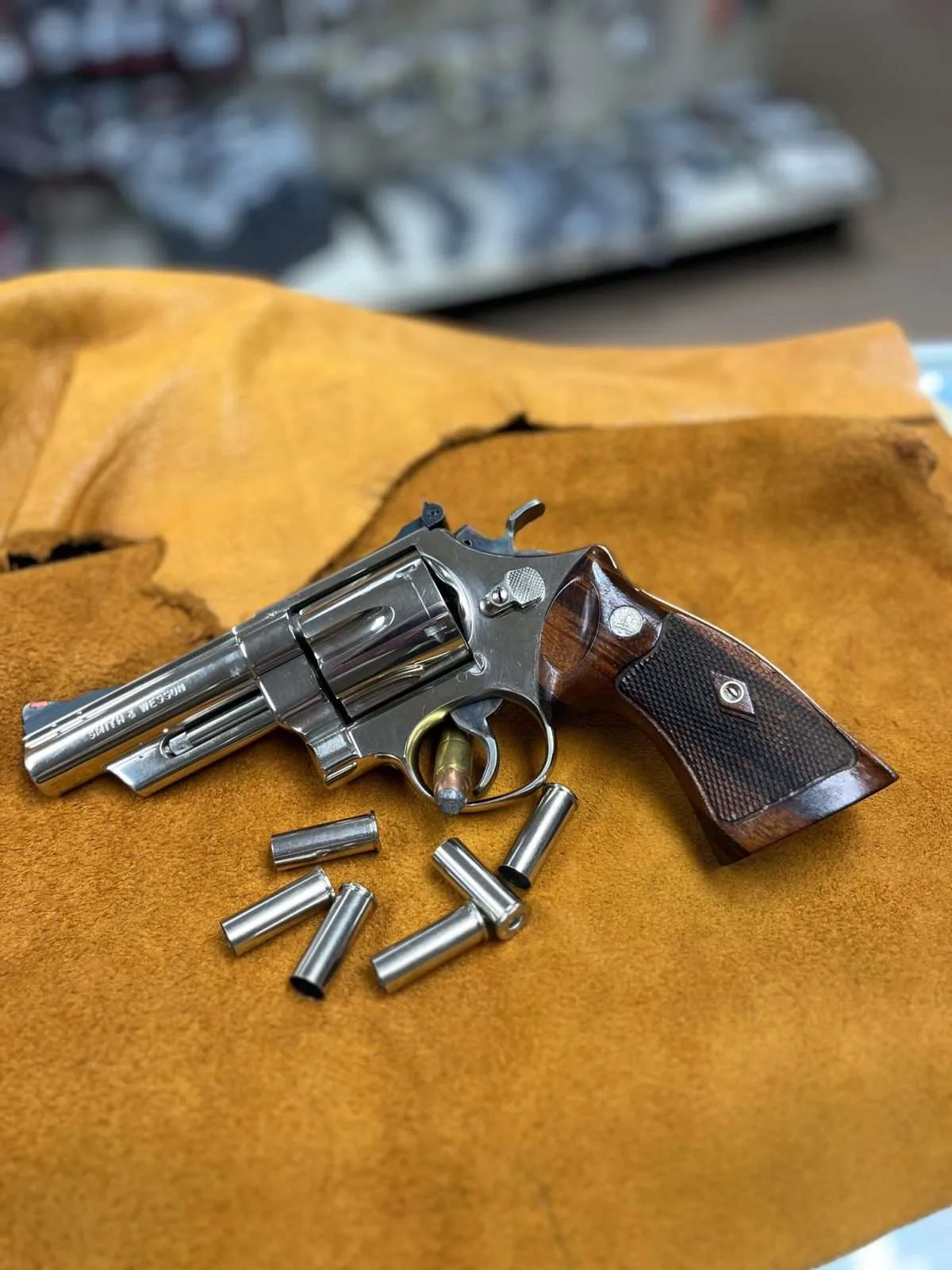
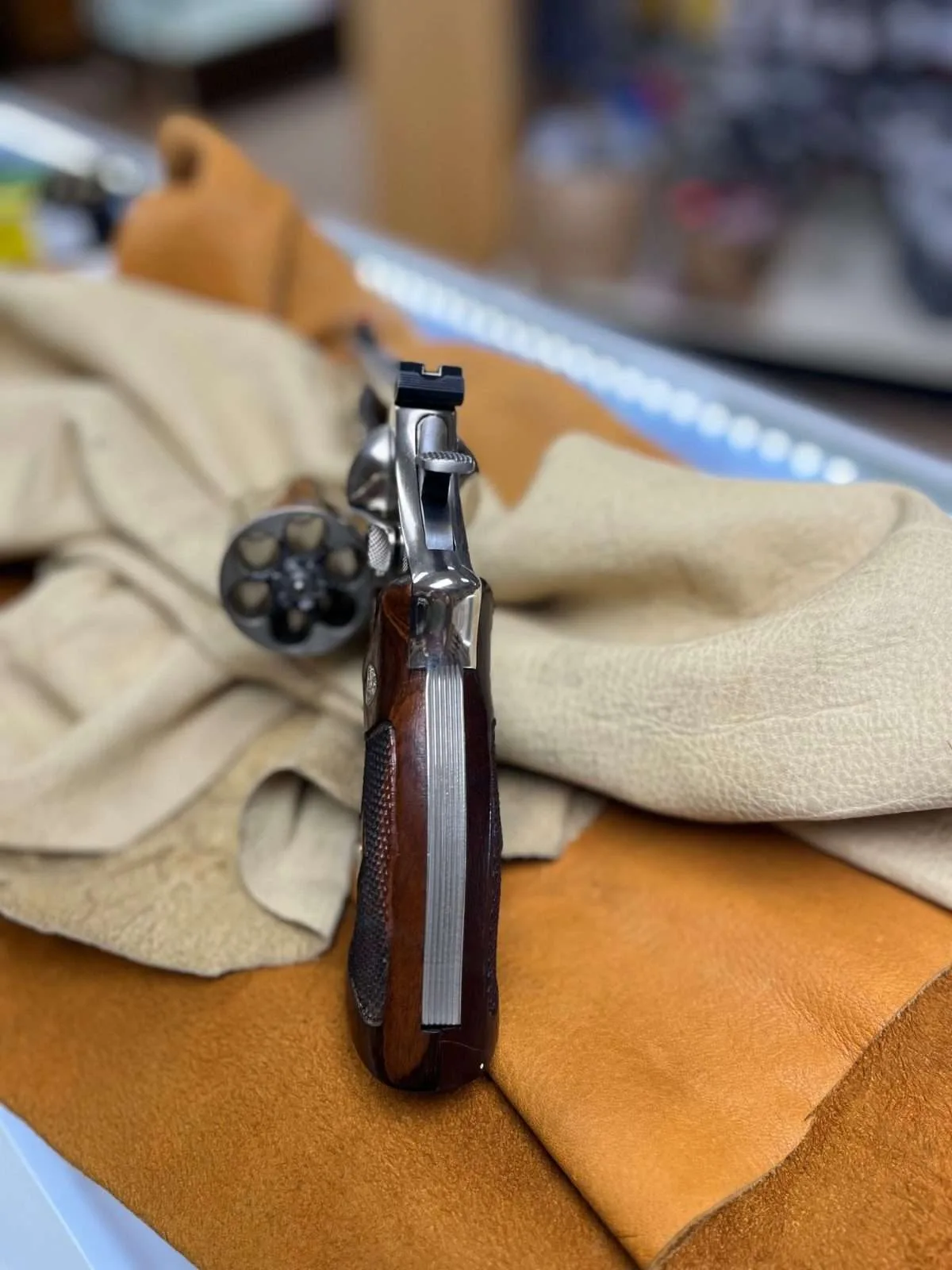
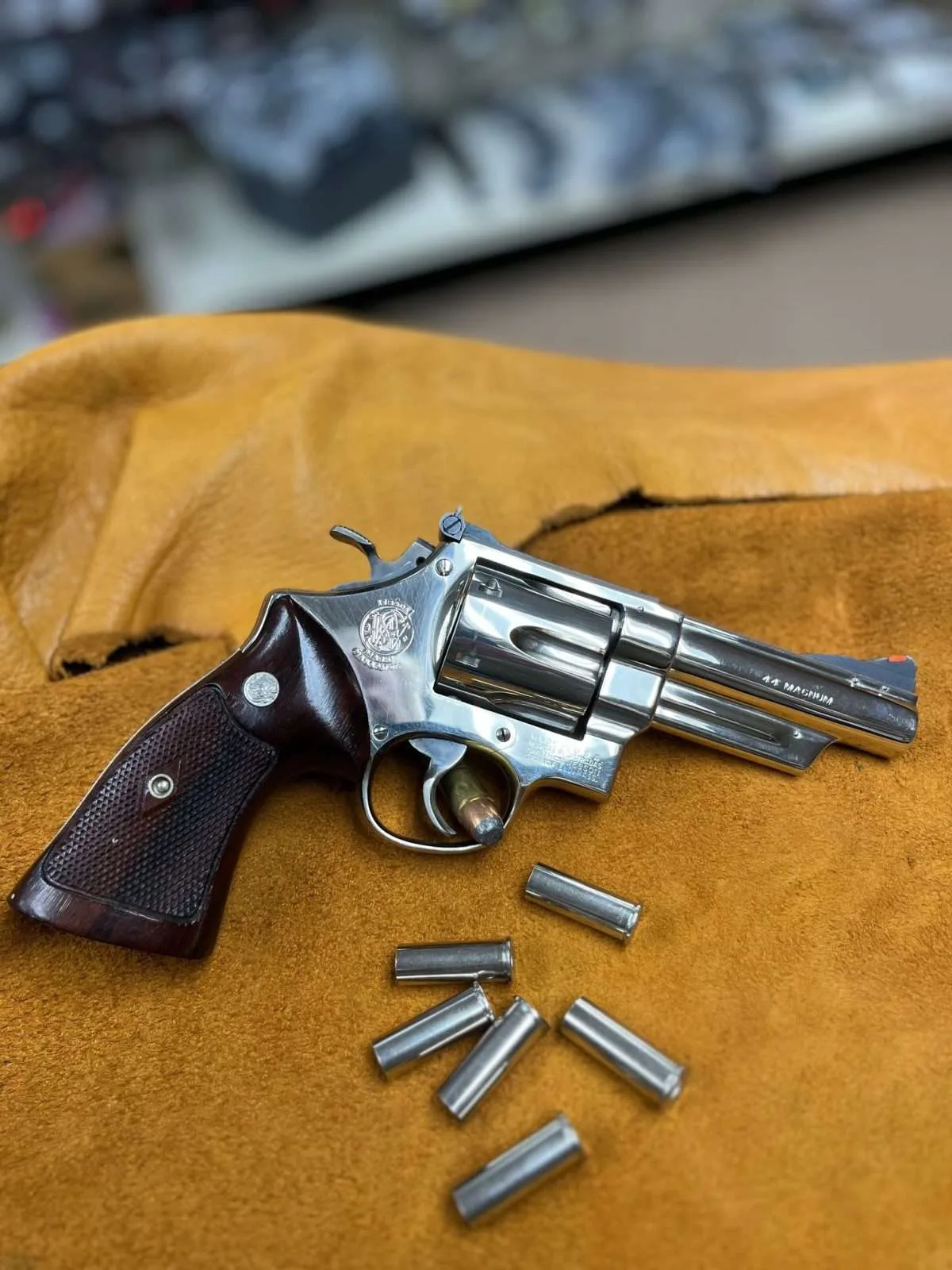
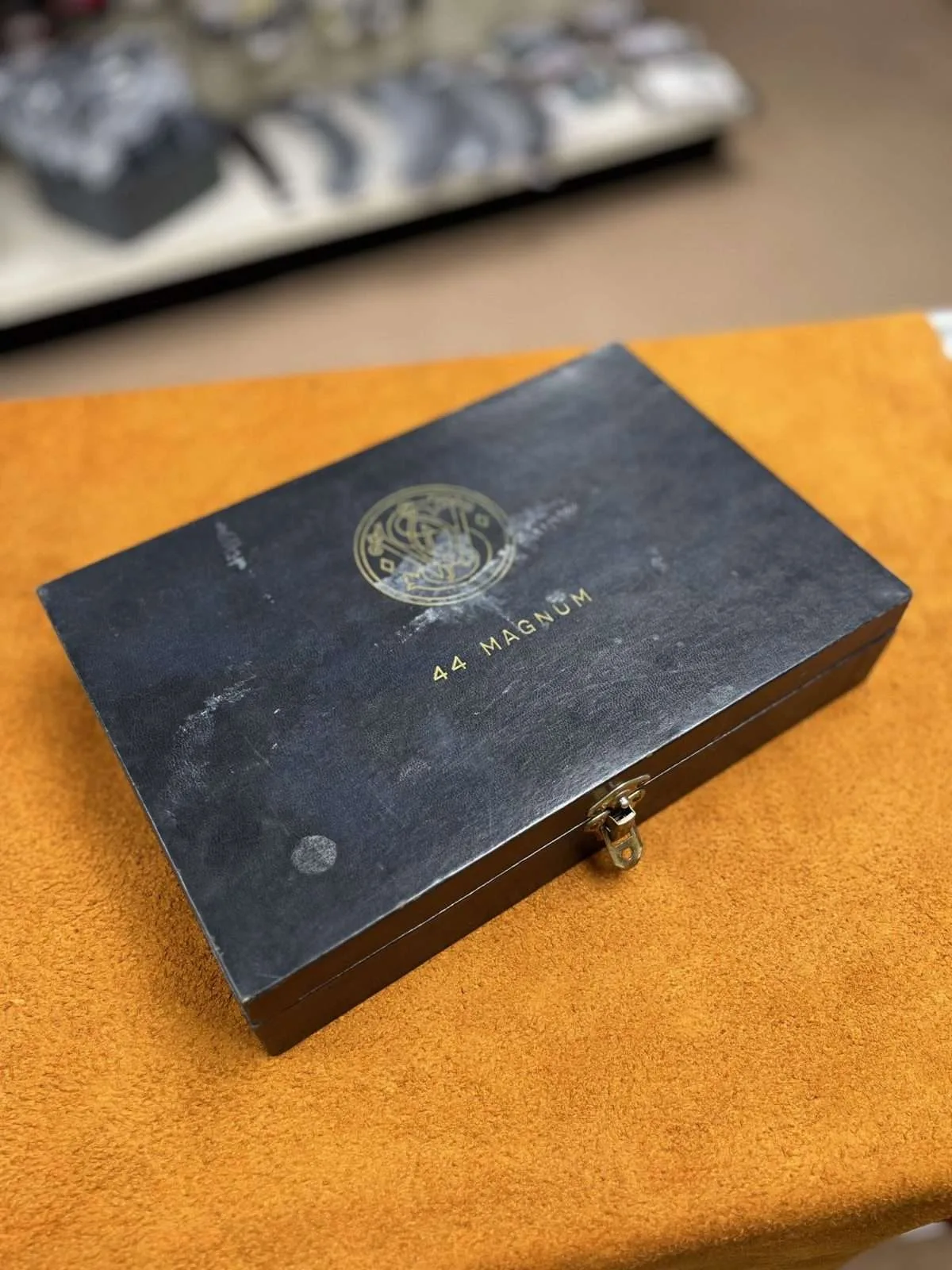
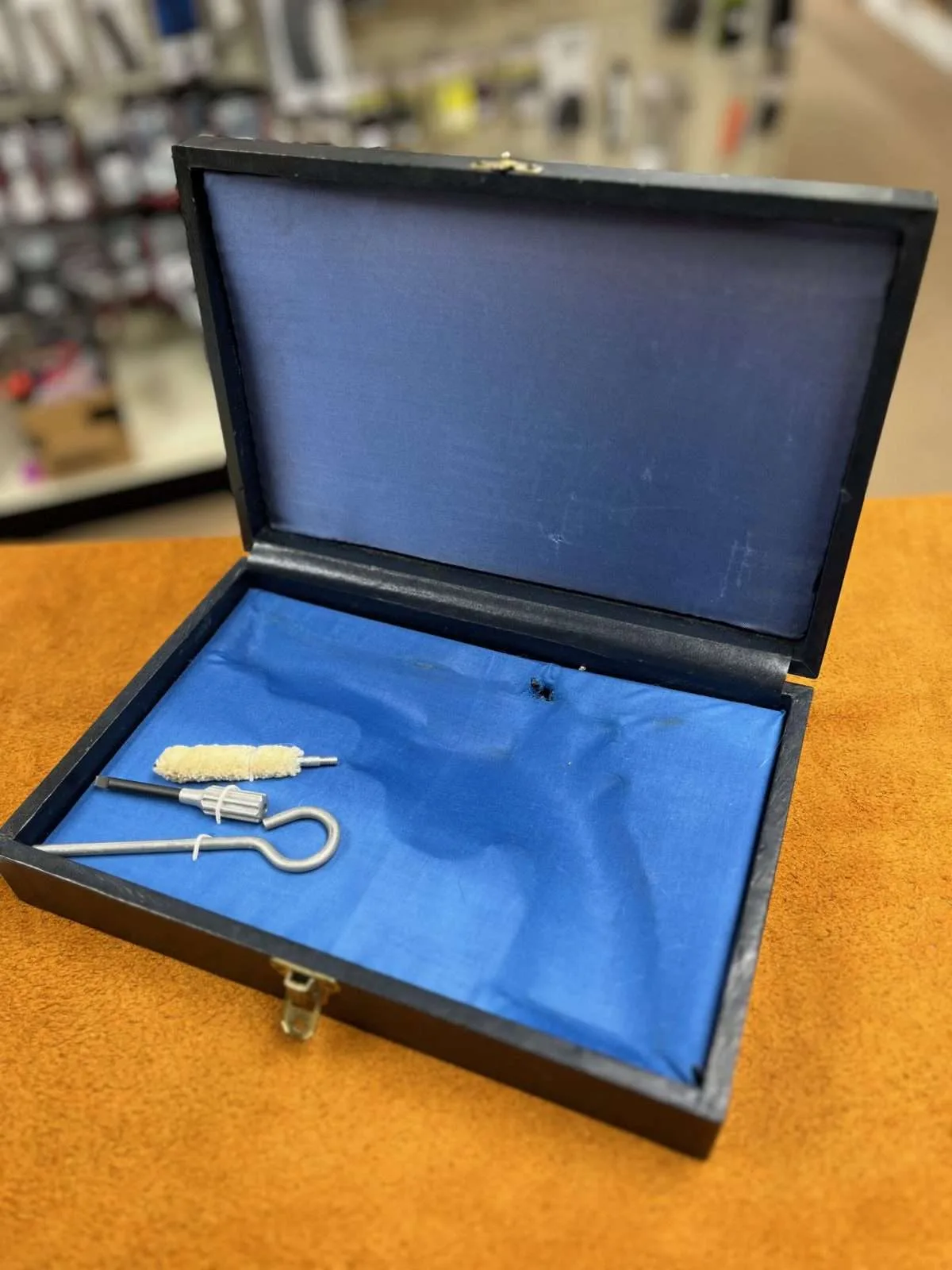
Possibly the first documented example of the rarest configuration in the entire Pre-Model 29 series: 5-screw N-frame, special-order 4-inch barrel, original factory nickel. The S&W Forum’s standing census of 5-screw nickel .44 Magnums lists only 4–5 documented examples — every previously documented one has a 6½″ barrel. Shipped July 16, 1957 to Sargent Sowell Inc., Grand Prairie TX. Comes with the complete Smith & Wesson Historical Foundation factory letter (in gallery), original 1957 factory invoice, original presentation case with factory tools, and original box & papers. 95%+ condition. The exact configuration John Milius wrote into the Dirty Harry screenplay in 1970 — that S&W itself, working directly with Warner Bros., could not source for filming.
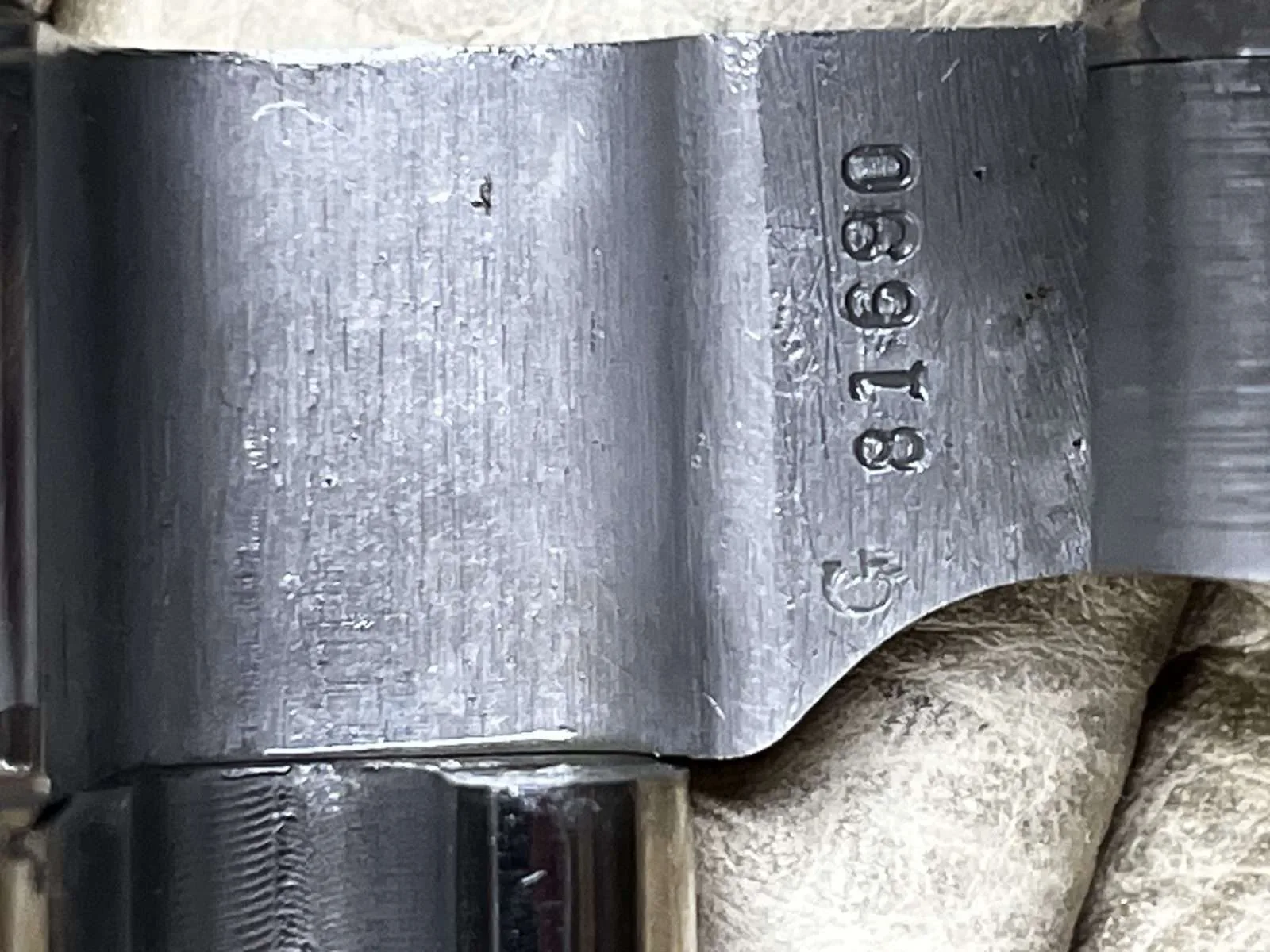
This revolver is the configuration the Smith & Wesson collector community has openly been hunting for decades and, as of the date of the factory letter in the gallery, was not believed to exist as a documented original. Serial S169056 is a 5-screw, 4-inch, factory-nickel .44 Magnum, with a Historical Foundation factory letter confirming the nickel as original. Three of the rarest features in S&W’s most historically significant revolver, all stacked onto one frame, with paperwork.
The S&W Forum maintains a running census thread on nickel 5-screw .44 Magnums — the thread title is “Curious about nickel 5 & 4 screw pre-29’s and 29’s”. The standing summary on that thread reads:
“5-screw 44 Magnums with a nickel finish and 6 1/2-inch barrel are very rare and only four or possibly five have been documented. All of the 5-screw, nickel 44 Magnums known have a 6 1/2-inch barrel (still looking for a 4-inch with an original nickel finish and 5-screw frame!!!).”
The Blue Book of Gun Values separately puts total 5-screw factory-nickel production across all barrel lengths at approximately 11 units. The census has positively documented 4–5 of them; every documented example has the standard 6½″ barrel. S169056 is the 4-inch the census says it has not seen.
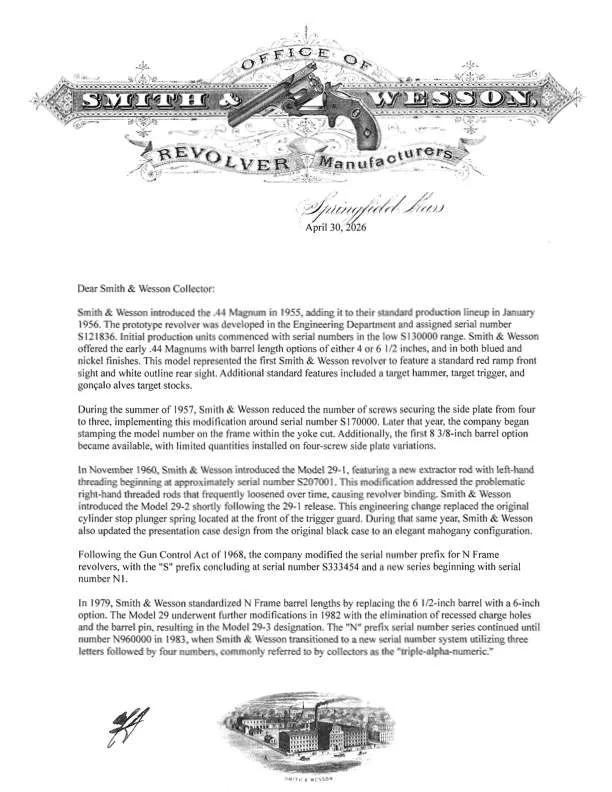
The earliest .44 Magnums were built on Smith & Wesson’s large N-frame with five total visible screws: four securing the sideplate, plus the screw forward of the trigger guard (collectors count that fifth screw, hence “5-screw”). In the summer of 1957 the factory reduced the count to three sideplate screws, which collectors call the “5-to-4 screw transition.” Per the factory letter in the gallery, this change occurred around serial S170000.
S169056 is roughly 1,000 serials below that change-over point — among the very last 5-screw N-frames Smith & Wesson ever built. [American Rifleman]
S&W historian Roy Jinks has noted that the very early .44 Magnum frames were assembled in part from frames originally built for the discontinued .45 Target model of 1955 — S&W used what it had on hand to build the first revolvers in this radical new cartridge. The 5-screw frame is the original .44 Magnum tooling, before any redesign or rationalization. [S&W Forum: 44 Magnum history]
The first 500 .44 Magnums all shipped with the heavy ribbed 6½″ barrel. A 4″ barrel was on the catalog from the beginning, but it took several months for the factory to actually deliver one, and across the entire 5-screw era 4″ guns are described as “only several hundred” of the total run. [American Rifleman]
A 4-inch barrel on a Pre-29 is rare in any finish.
Nickel plating was a catalog option from the beginning, but it was rarely ordered, and on the 5-screw frame it is almost unheard of. The Blue Book entry puts total 5-screw factory-nickel production at approximately 11 units. The collector census has documented 4–5 of those 11, and all of them have the standard 6½″ barrel.
A re-plated original (a gun originally shipped in blue and later returned to S&W for nickel application) is a very different gun from a factory-original nickel. The two configurations carry an order-of-magnitude difference in collector value. The factory letter on this gun confirms the nickel as original.
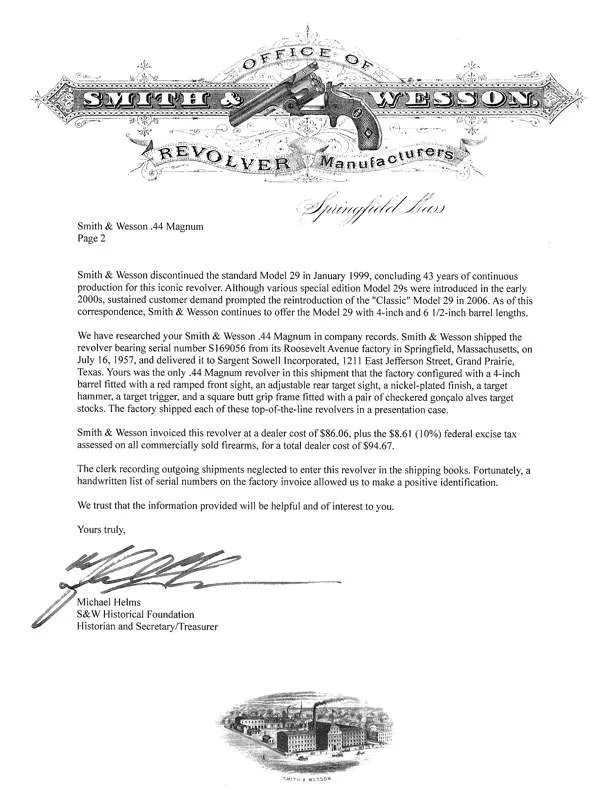
Pages 14–20 of the gallery on this page show all seven pages of the Smith & Wesson Historical Foundation factory letter, signed by Michael Helms, Historian and Secretary/Treasurer, dated April 30, 2026, under serial S169056.
Page 2 of the letter (the configuration paragraph) is the proof page. It reads, in part:
“Smith & Wesson shipped the revolver bearing serial number S169056 from its Roosevelt Avenue factory in Springfield, Massachusetts, on July 16, 1957, and delivered it to Sargent Sowell Incorporated, 1211 East Jefferson Street, Grand Prairie, Texas. Yours was the only .44 Magnum revolver in this shipment that the factory configured with a 4-inch barrel fitted with a red ramped front sight, an adjustable rear target sight, a nickel-plated finish, a target hammer, a target trigger, and a square butt grip frame fitted with a pair of checkered gonçalo alves target stocks. The factory shipped each of these top-of-the-line revolvers in a presentation case.”
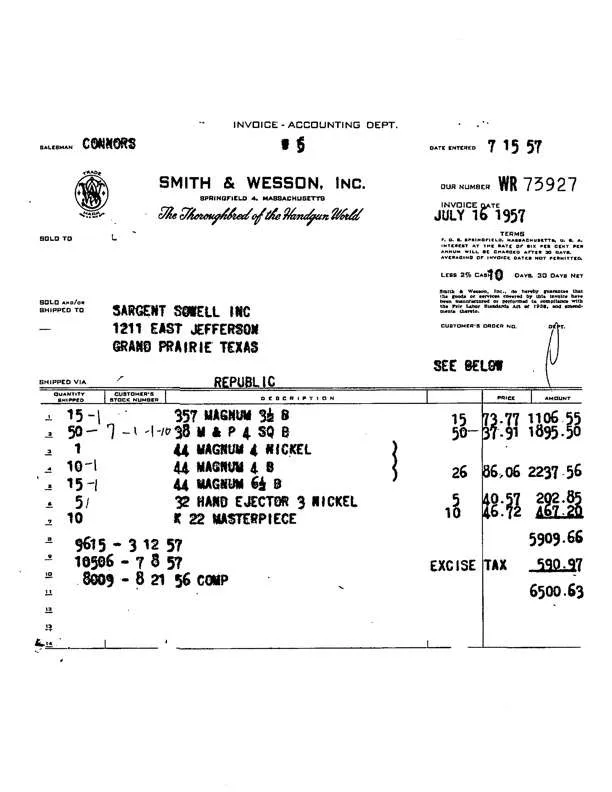
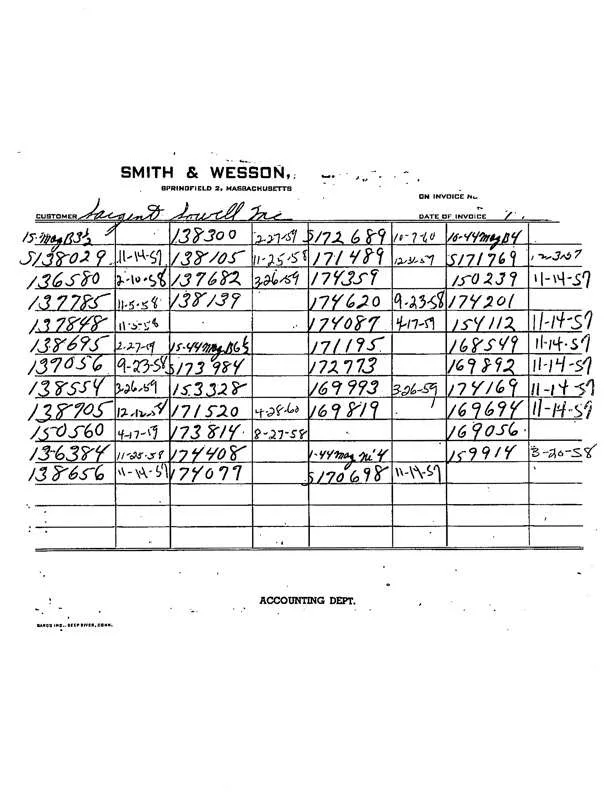
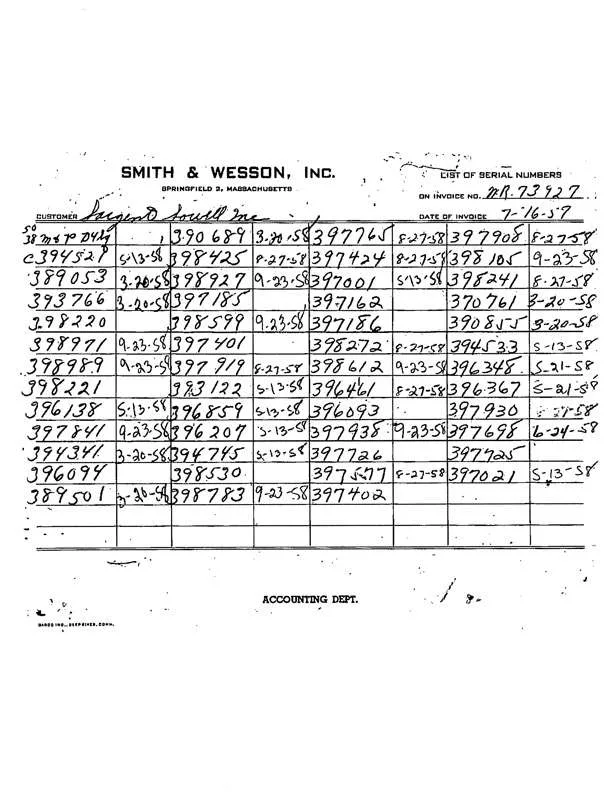
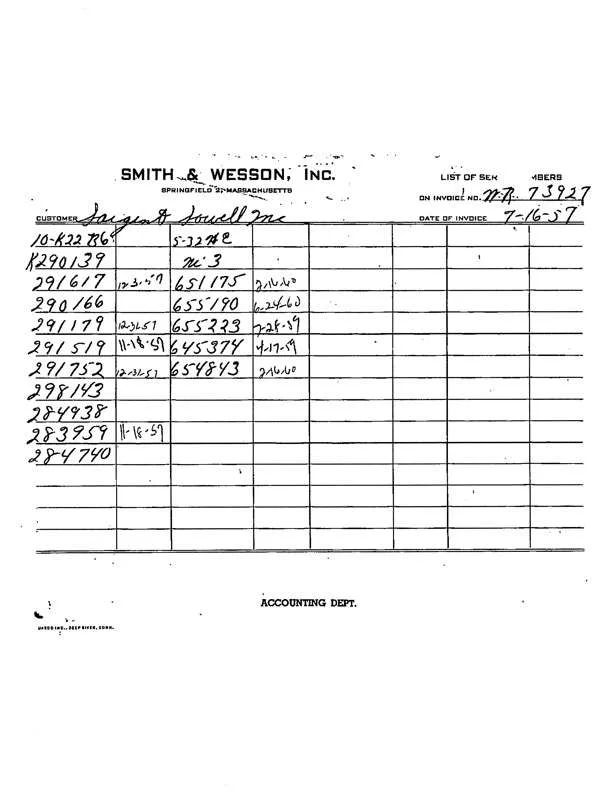
Page 3 of the letter is a scan of the original Smith & Wesson factory invoice (WR 73927) dated July 16, 1957. The invoice itemizes the entire shipment to Sargent Sowell:
| Qty | Configuration | Unit cost |
|---|---|---|
| 15 | .44 Magnum 6½″ blued | $73.77 |
| 10 | .44 Magnum 4″ blued | $86.06 |
| 1 | .44 Magnum 4″ NICKEL — this gun | $86.06 |
Plus $8.61 federal excise tax, total dealer cost $94.67. One nickel in a 26-gun shipment. That ratio is the empirical floor on how rarely the factory built a nickel .44 in this era.
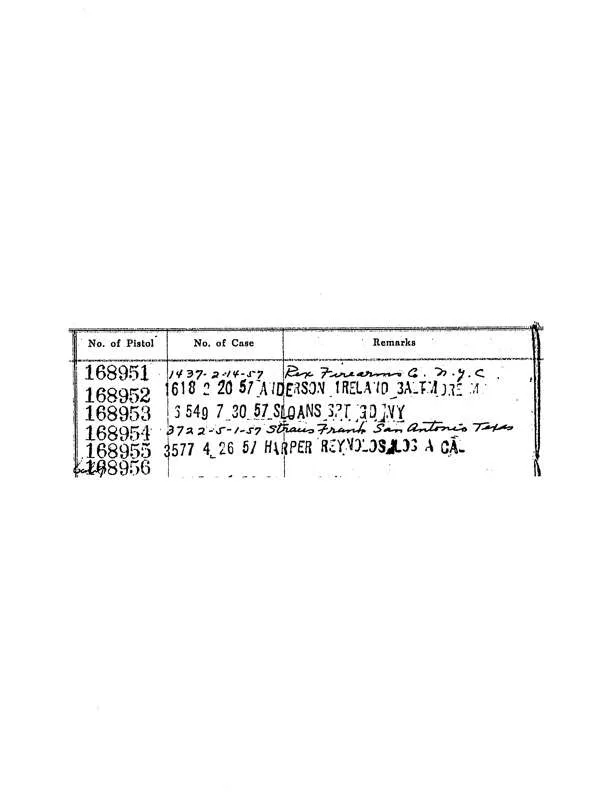
Pages 4 through 7 of the letter reproduce the handwritten shipping logs that allowed the Historical Foundation to identify this gun in S&W’s records. The letter notes:
“The clerk recording outgoing shipments neglected to enter this revolver in the shipping books. Fortunately, a handwritten list of serial numbers on the factory invoice allowed us to make a positive identification.”
In other words: without the surviving invoice copy, this gun would not be letterable today. That it letters at all is fortunate.
Smith & Wesson Historical Foundation letters are the gold standard of provenance documentation for collectible S&W revolvers. Standard turnaround for a new letter request is 8–12 weeks, with a $50 fee. The S169056 letter is in hand, ready to ship with the gun. No wait.
| Built | Mid-1957, Smith & Wesson, Roosevelt Avenue factory, Springfield, Massachusetts |
| Shipped | July 16, 1957, via Republic freight |
| Original consignee | Sargent Sowell Incorporated, 1211 East Jefferson Street, Grand Prairie, Texas |
| Dealer cost | $86.06 + $8.61 federal excise tax = $94.67 (per invoice) |
| Salesman | “Connors” (per invoice header) |
| Factory invoice number | WR 73927 |
| Factory letter | S&W Historical Foundation, signed Michael Helms, 4/30/2026 |
About Sargent Sowell: A Texas-based police-supply wholesaler operating as SA-SO, located south of Dallas/Fort Worth. The company mailed catalogs to police agencies across the United States from the 1950s through the early 1980s — the 1967 SA-SO catalog ran 257 pages of police/fire/municipal supplies. In the 1970s individual officers could walk in, talk to a salesperson, and walk out with a new S&W at the lowest price in the country. Still in business today (now selling safety and traffic supplies). [S&W Forum: Sargent Sowell history] [SA-SO today]
John Milius’s original Dirty Harry screenplay specified a 4-inch nickel Model 29. Per the National Rifle Association’s American Rifleman: “His Sept. 23, 1970, movie draft calls for exactly such a gun in nickeled finish.” [American Rifleman]
Production tried to source the configuration for filming. According to the Internet Movie Firearms Database, citing S&W historian Roy Jinks: at the time of filming (1970–71), regular Model 29 production was paused. Warner Bros. approached S&W for guns. Eastwood contacted Bob Sauer (then a representative for Smith & Wesson). Fred Miller at the plant assembled two Model 29s from spare parts for the production — and the only parts on hand were 6½″. The screen gun for the most famous handgun moment in cinema history is a 6½″ blued Model 29 cobbled together from spare parts because S&W itself, working directly with the studio, could not source a 4-inch nickel gun. [IMFDB: Dirty Harry]
Milius reportedly later pulled a 4-inch Model 29 from his desk and said, “This is the gun Dirty Harry should have used.”
Serial S169056 is exactly that gun, and the configuration is documented as original on a 4/30/2026 S&W Historical Foundation factory letter. The right gun finally exists in the wild, with paperwork.
All standard Pre-Model 29 collector hallmarks are present on this gun.
| Manufacturer | Smith & Wesson, Springfield, Massachusetts |
|---|---|
| Model designation | Pre-Model 29 (built before official Model 29 stamping began in mid-1957) |
| Serial number | S169056 |
| Date shipped | July 16, 1957 |
| Original destination | Sargent Sowell Inc., Grand Prairie, Texas |
| Frame | N-frame, 5-screw configuration |
| Caliber | .44 Remington Magnum (case 0.125″ longer than .44 Special; cylinder also accepts .44 Special) |
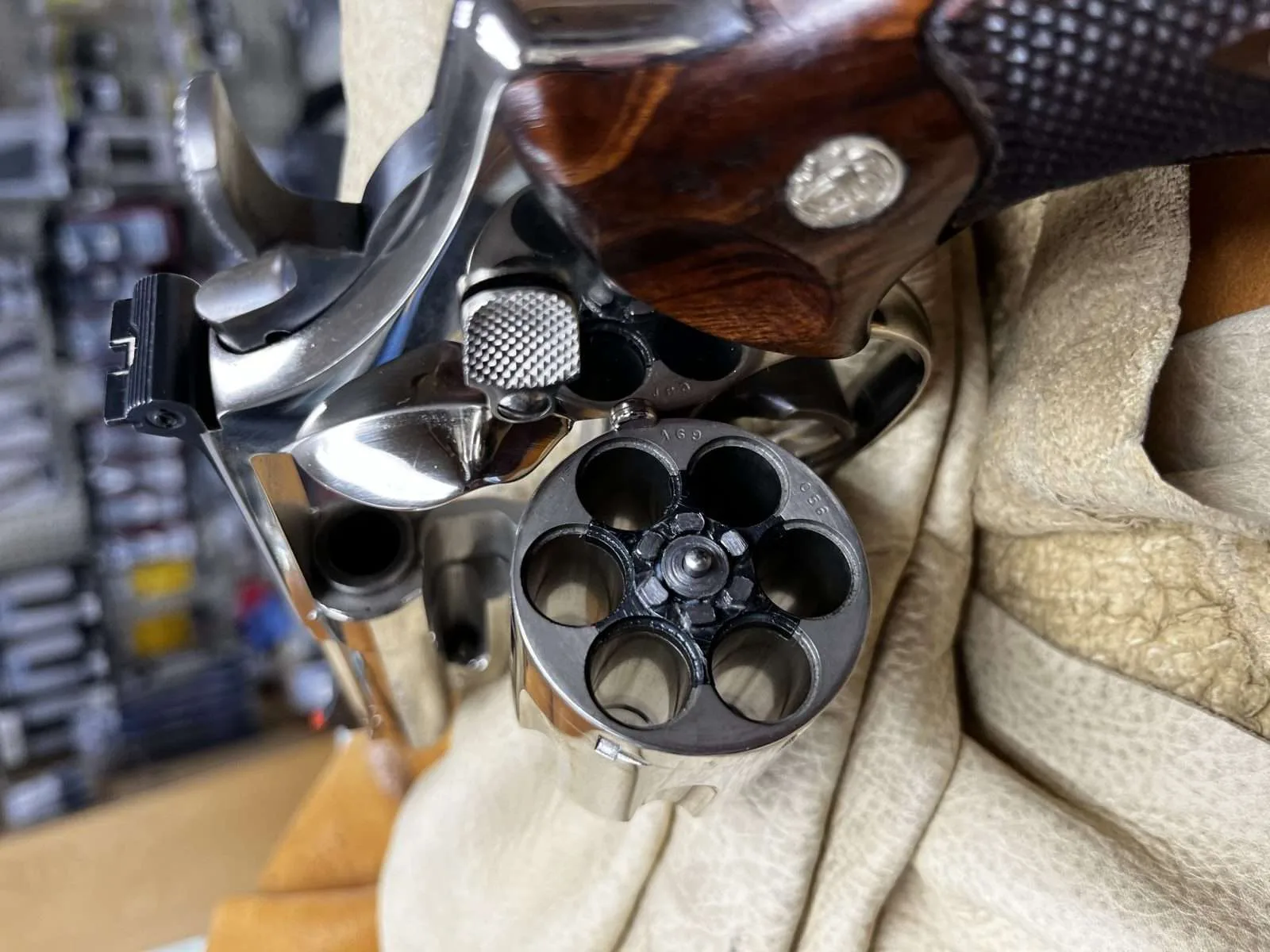
| Capacity | 6 rounds |
| Action | Double action / single action |
| Barrel length | 4 inches (special order) |
| Barrel features | Pinned barrel |
| Cylinder | Recessed (countersunk chamber rims) |
| Finish | Factory nickel, original (not a refinish), confirmed by factory letter |
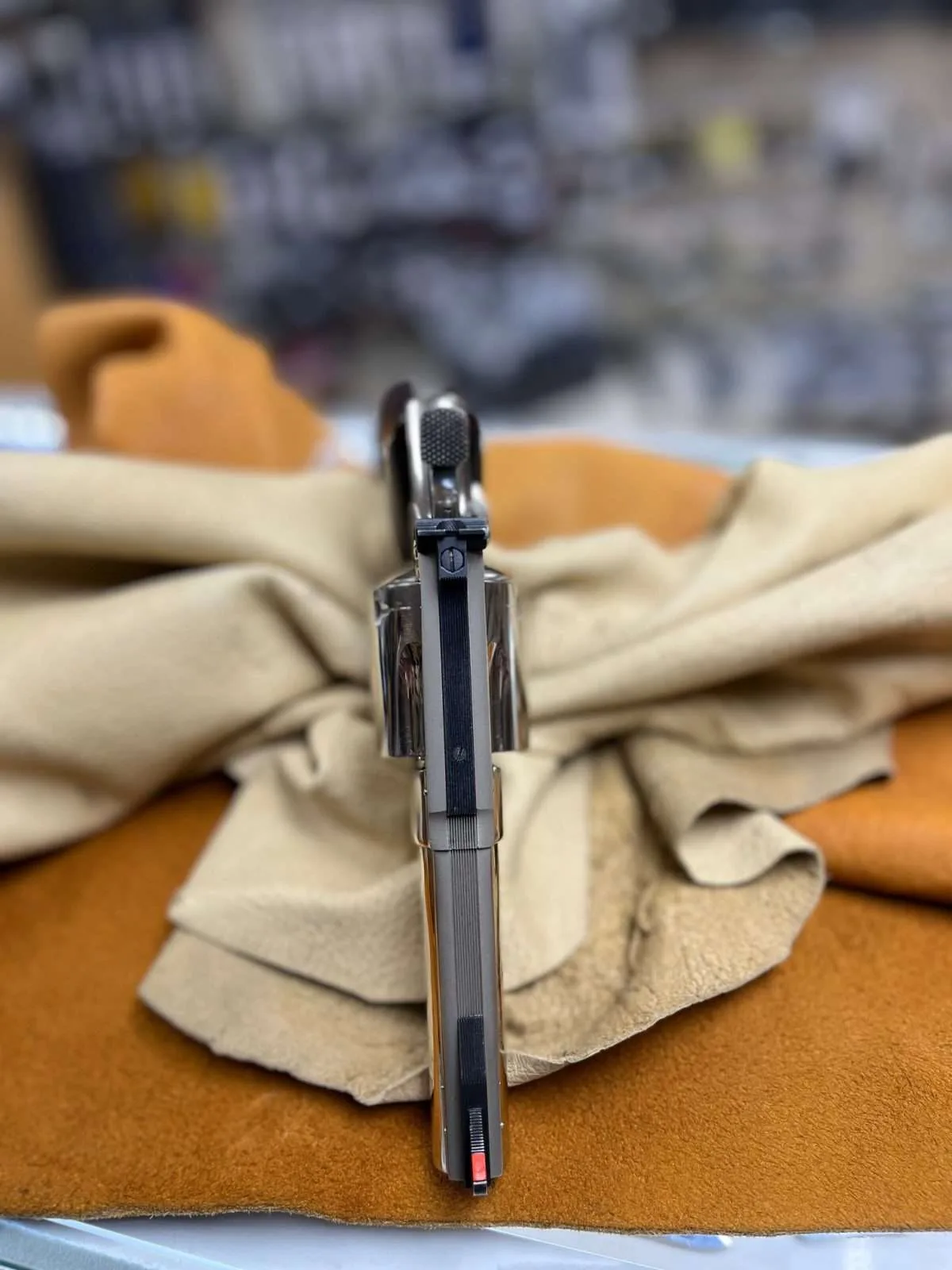
| Front sight | Red ramp, factory |
| Rear sight | Adjustable target, white outline |
| Hammer | Target hammer (wide spur) |
| Trigger | Target trigger (wide face) |
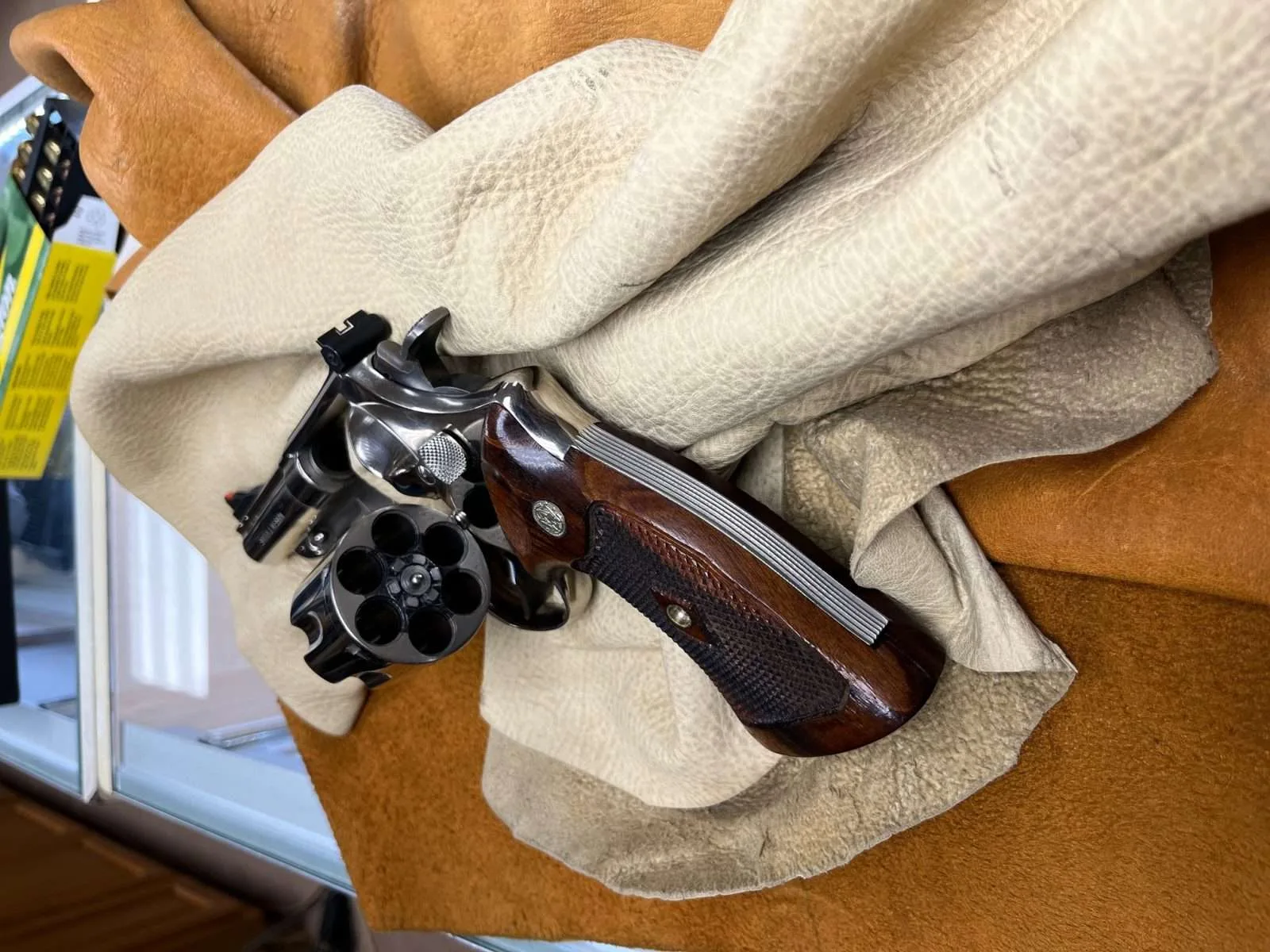
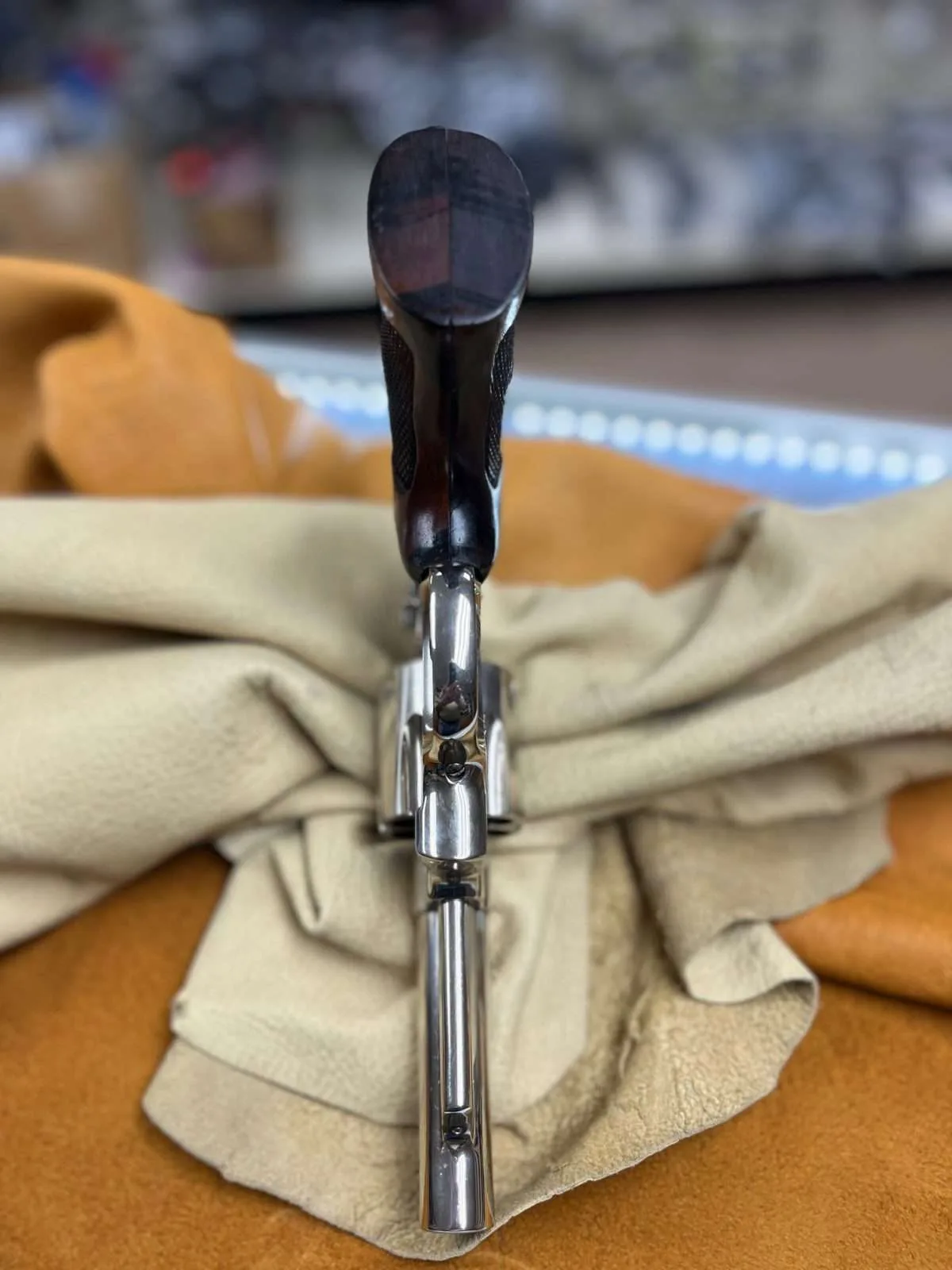
| Grip frame | Square butt |
| Stocks | Checkered Gonçalo Alves target (“Coke bottle”), factory |
| Condition rating | 95%+ |
Baseline reference: Blue Book of Gun Values for a standard blued 5-screw Pre-29 ranges from approximately $1,550 (80%) to $2,500 (100%). The Blue Book explicitly notes factory nickel commands a substantial premium and that approximately 11 of the 5-screw .44 Magnums received factory nickel. [Blue Book]
Standard first-year realized comp: LSB Auctions sold a 1956 5-screw Pre-29 with 6½″ barrel and presentation case for $6,545. That’s the market for a documented, cased, standard 6½″ blued first-year Pre-29 — before any rarity multipliers for nickel finish or 4-inch barrel. [LSB Auctions]
Closest configuration-specific comp: DBG Firearms currently lists a Pre-29 5-screw 4″ nickel at $2,499 — but its own listing notes that example is a factory-returned re-plate, not original factory nickel, and that an unrestored original would command “nearly $20,000.” [DBG Firearms]
Top-end ceiling for documented first-year Pre-29s: Rock Island Auction realized $49,938 in December 2023 for a first-year Pre-Model 29 engraved by George Dallas and presented by S&W president Carl Hellstrom to Elmer Keith. [RIA Dec 2023 premier]
Original 1956 retail: $140 — approximately $1,700 in today’s dollars. Roughly $94 at dealer cost. That price was for the standard 6½″ blued gun; nickel and 4-inch were upcharges.
Asking: $18,900. Positioned just below the DBG-quoted ~$20,000 ceiling for an unrestored original 4″ nickel 5-screw, and well below the Elmer Keith engraved/presented comp. Given the S&W Forum census essentially does not yet acknowledge that a documented 4-inch original-nickel 5-screw exists, this gun has no true market comp. The asking number reflects the published ceiling for the configuration; the rarity arguably supports more.
This revolver sits at the intersection of four collector worlds.
S&W collecting. The 4-inch factory-nickel 5-screw Pre-29 is, per the standing census of the Smith & Wesson collector community, the previously undocumented variant of the most desirable configuration of S&W’s most historically significant revolver. The S&W Collectors Association and writers like Bill Cross and Roy Jinks have published the Pre-29 story for decades; a 4-inch nickel original-finish 5-screw has been notional, not documented. This is the documented one.
American firearms history. The .44 Magnum cartridge was developed by S&W president Carl Hellstrom in partnership with writer Elmer Keith and Remington Arms in the early 1950s. Keith had spent decades pushing the .44 Special to its limits with heavy bullets and stout powder charges; Remington made the case 0.125″ longer to safely contain the much higher pressures and to prevent accidental chambering of the magnum round in older .44 Special revolvers. The first production gun was completed December 15, 1955 (serial S130927, to Walter Sanborn in the S&W Sales Department for advertising development); the second went to R.H. Coleman of Remington on December 29. The cartridge was announced to the public January 19, 1956 at $140 retail. (Sturm Ruger, working from publicly available cartridge data and a leaked specimen, actually beat S&W to market by several months in 1956 with the Blackhawk single-action.) This gun, S169056, was built 18 months into that production run, at the very end of the original 5-screw tooling. [.44 Magnum history] [RIA: Elmer Keith and the .44 Magnum]
Hollywood. The configuration John Milius wrote into the Dirty Harry script in September 1970 — that Bob Sauer at S&W and Fred Miller at the plant could not source, even cobbling together two filming guns from spare parts — is exactly this configuration. The screen gun is a 6½″ blued because parts were what S&W had on hand. The script gun is what you are looking at.
Investment-grade collecting. 95%+ condition. Full provenance: factory letter, factory invoice, factory tools, original case, original box, original papers, traceable original distributor. It is the kind of S&W a serious collector buys once and never sells.
This revolver ships to your FFL. Colorado residents may pick up in-store at our Steamboat Springs location. Call before you wire. At this price point we expect to talk to you, walk you through the factory letter and invoice, send additional close-up photos on request, answer every question, and discuss escrow arrangements if you prefer them. Serious inquiries only.
Primary documentation (in our possession, available for inspection, full PDFs)
Collector authority — 5-screw nickel census
Editorial / historical
Books standard to S&W collecting
Valuation references
| UPC | USEDREVOLVER |
|---|---|
| Availability | In Steamboat Now |